The Earthquake That Changed Everything: From Agency to Riot Games
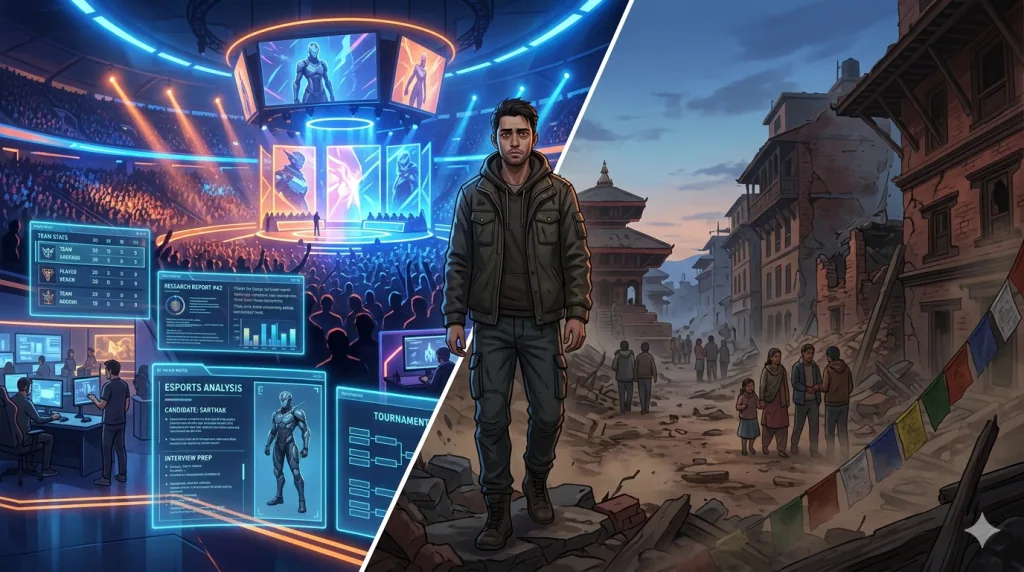
Kathmandu, Nepal. April 2015. 9,000 people died.
I was there.
When Crisis Creates Clarity
I was running an advertising agency. Making money. Winning awards. Building something that looked like success.
And I was miserable.
The work felt like grinding gears. Disconnected from anything that mattered. I’d wake up and think about the hours until I could stop working.
Then the earthquake hit.
For five days I was on the street with no passport, no ATM access, no way to contact my family. The world went quiet. Everything I cared about at the office felt small.
When I got out, something shifted.
I realized I’d die doing something I hated. Not literally on a street in Nepal, but metaphorically. Day after day. Year after year. Choosing comfort over something that actually lit me up.
I’d always been passionate about gaming. Played League of Legends religiously. But I’d convinced myself I didn’t have the right background. No degree in game design. No shipped titles. No connections in the industry.
That story was convenient. It let me stay comfortable.
So I shut down the agency and decided to get a job at Riot Games.
The Preparation Phase
Most people apply for jobs.
I engineered the application.
First move: research. Hired two research agencies for custom reports on gaming in Vietnam. Deep dive. Understanding Riot’s market positioning, their player base, their culture.
Second move: coaching. Hired a League of Legends coach. Not to get better at the game, but to understand it at a deeper level. To think like a player. To earn credibility.
Third move: hostile interview training. Hired a PR agency because I knew Riot would be testing me hard. They hire smart people. They expect you to be prepared.
Fourth move: presence. Flew to Taiwan multiple times to camp at Starbucks near the office hoping to bump into the hiring manager. This sounds extreme. It was. But I wasn’t applying for a job. I was engineering a relationship.
Thirteen rounds of interviews over nine months.
Every single one prepared for. Data backed up. Stories ready. No wing-it energy.
Three Lessons That Matter
Lesson One: Crisis Creates Clarity
The earthquake didn’t solve anything. The fear was still there. The self-doubt. The imposter syndrome.
But clarity cuts through all of it.
When you know what you actually want to do with your life, suddenly the comfortable story doesn’t work anymore. You start moving.
Most people spend their entire careers waiting for crisis to hit. Don’t be that person. You don’t need a catastrophe. You need to get honest about what you’re doing and whether it’s worth your time.
Lesson Two: Preparation Is Your Competitive Advantage
A prepared candidate looks lucky.
An unprepared candidate looks average.
The difference is visible immediately. They ask you a question and you have a sharp answer backed by data and experience. Boom. You’re suddenly the person they want to hire.
Preparation isn’t arrogant. It’s respect. It’s saying “This matters enough to me that I’m going to know what I’m talking about.”
Every gaming company is hunting for people who take the interview seriously enough to prepare. Most candidates don’t. Most wander in hoping to improvise their way through.
Here’s what I learned hiring research agencies and coaches for Riot. It wasn’t about some secret trick. It was about removing ambiguity. The more I prepared, the fewer surprises in the room. The fewer surprises, the more confident I sounded. Confidence isn’t arrogance. It’s clarity. And clarity is magnetic.
Not you. Not anymore.
Lesson Three: Engineer Your Opportunities
Applying and hoping is a lottery game.
Engineering is a grind.
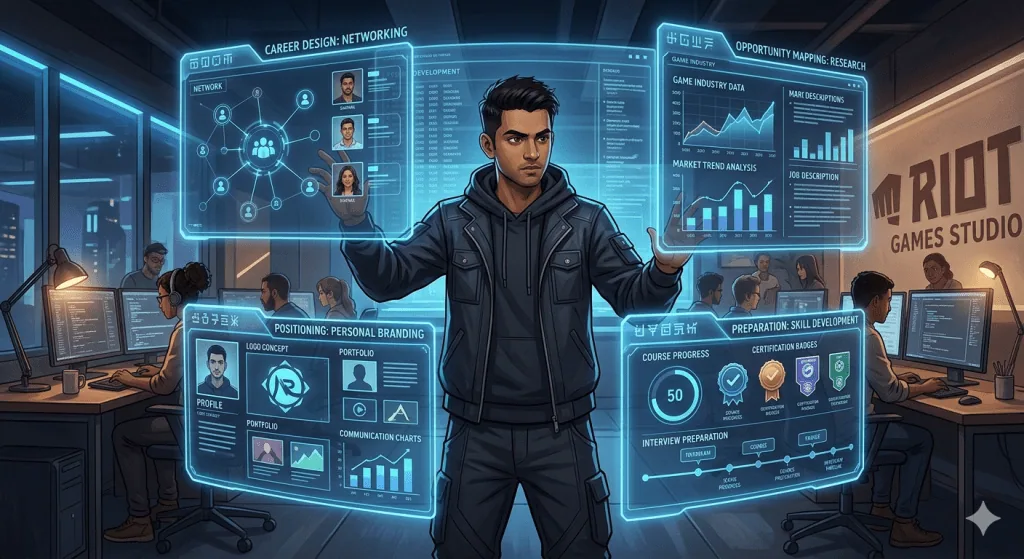
I didn’t hope Riot would see my application. I built a path where they had to see me. I researched their culture. I earned credibility in their game. I trained for their interview. I showed up where they work.
This applies everywhere. You’re not waiting for a lucky break. You’re making the landscape where the break becomes inevitable.
LinkedIn? Engineer your presence. Make your profile speak. Create content that shows you understand the industry. Respond to posts. Build actual relationships. The goal isn’t to be famous. It’s to be credible enough that when you reach out, they remember your name.
Conference in your field? Engineer your attendance. Know who will be there. Line up conversations. Show up prepared. I didn’t go to conferences hoping to bump into hiring managers. I went with a list of five people I wanted to talk to and three talking points prepared for each conversation.
Job interview? Engineering beats luck every single time. I went through 13 rounds not because I’m the luckiest person alive. I went through 13 rounds because every single one was prepared for. I had answers ready. I had data ready. I had stories ready. That’s not luck. That’s design.
The Move
This week: Get honest. Are you doing work that matters to you? If not, why are you still there?
Next week: If the answer is no, pick one industry that actually interests you. Spend 10 hours learning about it. Not a quick surface read. Deep dive.
Within two weeks: Design one small move toward that industry. It could be reading their job postings. Following their leaders on LinkedIn. Playing their games. Using their products.
Preparation isn’t luck. It’s the thing that makes luck unnecessary.
Read our complete guide: Gaming Industry Career Coaching
Frequently Asked Questions
Q: How do I know if I’m in the wrong career?
A: When you’re chasing success on paper but feeling emptier every day, that’s your signal something’s wrong. You might be grinding the treadmill that keeps getting steeper, checking boxes society told you to check, or building a life that looks good from the outside but feels hollow inside. Crisis often shows you clearly what comfort hides.
Q: What should I do if I realize I’m in the wrong field?
A: Stop waiting for the perfect moment. The only moment you have is right now. You don’t need to survive an earthquake to change your situation, but you do need to be willing to shake it up. Take one specific action today, whether that’s updating your resume, sending a message, or writing your first post about your real passion.
Q: How do I compete for an impossible opportunity?
A: You engineer your way in by creating leverage others can’t match. Traditional qualifications lock you out, so you go around them. Get proprietary research, media training, insights nobody else has, and show up more prepared than humanly necessary. When everyone else is playing checkers, you play chess. That level of commitment is what separates people who get hired from people who get ghosted.
Q: How do I turn a non-traditional background into my biggest asset?
A: Identify where your unique experience gives you unfair advantage. If you’re not a traditional gamer but passionate about games, that means you see things career gamers miss. Use everything you learned outside the industry and translate it into perspectives nobody else brings. Your outsider status isn’t a liability, it’s a superpower if you position it right.
Q: What three lessons changed my career after hitting rock bottom?
A: Crisis creates clarity about what you actually want, not what you’re supposed to want. Preparation is your competitive advantage when traditional qualifications don’t line up. And engineer your opportunities instead of just applying and hoping. When your world gets shaken, you finally see your situation clearly for the first time.