From Contractor to Full-Time: The Playbook That Got Eric Hired
Eric waited three years. Three years of broken promises. Three years of being told “next quarter” or “when we can afford it.” Three years of being a contractor while doing the work of a full-time employee.
The studio had a sweet deal. They got his labor without the commitment. No benefits to pay. No equity to negotiate. No long-term investment. And Eric? He developed imposter syndrome waiting for a commitment that never came.
Here’s what most developers don’t realize: Companies will never voluntarily convert contractors to full-time unless THEY have something to gain. Eric had to shift the game. He had to make the case undeniable.
The Curse of Knowledge
When you’re good at something, you assume it’s ordinary. Eric had spent three years solving massive problems inside that studio. Code architecture. Rendering pipelines. Systems that shipped features on time. He’d normalized it all.
That’s the curse. You do the work and forget it’s worth celebrating.
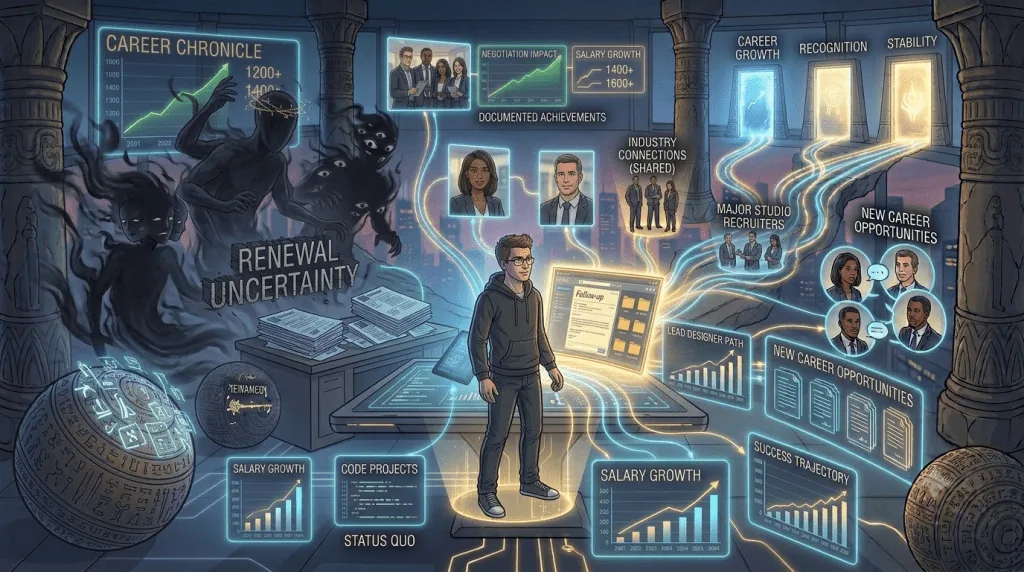
When they sat down to update his resume, the picture changed. Line by line, they documented the actual impact. Problems solved. Systems built. Scale of complexity. Suddenly it wasn’t invisible anymore. It was REAL.
The resume wasn’t just a document. It was a mirror showing him his own value.
Going full-time means negotiating pay, and it’s easy to fall into the salary negotiation trap in gaming if you’re unprepared.
And when they ran the numbers, the gap appeared. Market rate for his skill level was 25 to 30 percent higher than what he was making as a contractor. He wasn’t being underpaid. He was being extracted from.
First Homework: Document Your Wins
This is the grind that separates contractors who get offers from contractors who wait forever.
Start writing down what you’ve actually done. Not in humble language. In specifics.
Not: “Improved code quality.”
But: “Refactored game systems architecture, reducing memory footprint by 18 percent and cutting initialization time from 4.2 seconds to 2.1 seconds.”
Not: “Worked with the team.”
But: “Mentored 3 junior developers through their first shipped features and documented 12 systems for onboarding knowledge transfer.”
Every win you’ve shipped, every problem you’ve owned, every team you’ve stabilized. Write it down. Make it specific. Make it quantifiable when possible.
This isn’t arrogance. This is clarity. Companies make hiring decisions on clarity, not on vibes.
The Feedback Trap
Eric’s next problem hit deeper: he’d never had a formal performance review. Three years, zero structured feedback. He didn’t know how his managers actually saw his work. Was he meeting expectations? Exceeding them? Did they even know what he’d done?
So he built a workaround. He designed a performance evaluation form and sent it out to his peers, his managers, and even his manager’s manager. He positioned it as a request for help, not a demand for validation.
“I’m trying to understand where I can improve. Would you mind filling this out?”
Within two weeks, he had structured feedback with actual scores. Not the “You’re great” fluff that doesn’t help. Real assessment. Real data.
That feedback became his weapon. It proved he could ask for what he needed. It showed his managers cared enough to respond. It documented his actual standing in the organization.
The Process Conversation
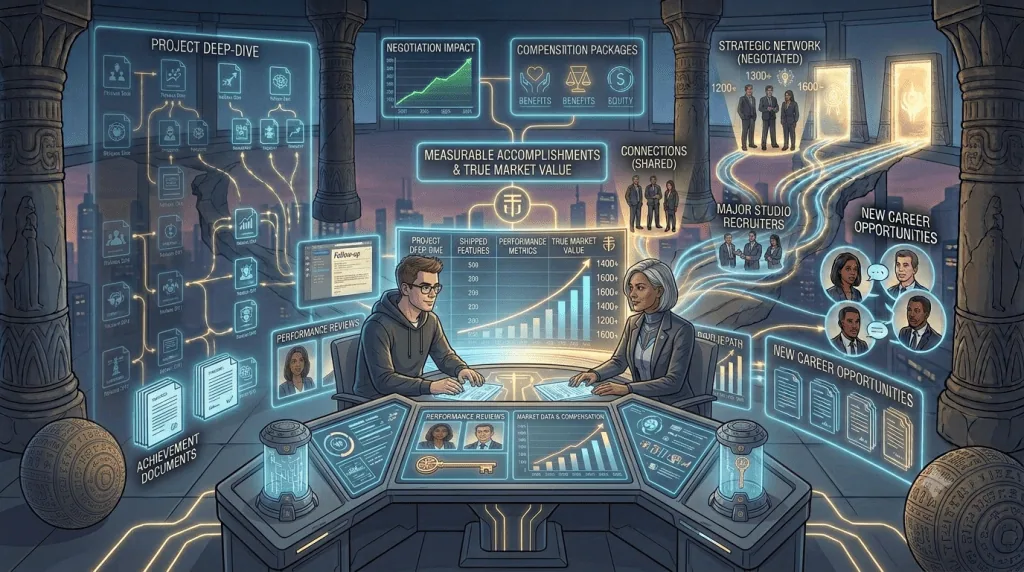
Armed with three pieces of ammunition, Eric approached his manager differently. Not “Why haven’t you hired me?” That’s emotion. That’s complaint. That’s weak.
Instead: “I’ve documented the value I’m creating. I understand the market rate for someone with my experience. I’ve gotten structured feedback that shows I’m meeting and exceeding expectations. What’s the process for moving to full-time?”
That last line is sharp. He didn’t ask if it was possible. He asked what the PROCESS was. He treated it as a known thing with steps, not a favor to ask for.
The manager didn’t have an answer. So they escalated. The COO got involved. And the COO assigned someone with a specific KPI: Convert Eric.
Suddenly Eric had an advocate with skin in the game. The conversion wasn’t a question anymore. It was a task with a deadline.
Two months later, Eric had a full-time offer with a 30 percent salary increase.
The Shift from Why to How
Here’s what actually changed the game: Eric stopped asking “Why?” and started asking “How?”
“Why” is emotional. It’s complaint. “Why haven’t you hired me yet?” sounds desperate.
“How” is process. It’s tactical. “How does a contractor become full-time here?” sounds like you’re solving a problem together.
The entire conversation shifted from Eric begging to Eric and his manager collaborating on a process. That’s the mood change that closes doors open.
Three Tactics Before You Make Your Move
If you’re still waiting for that full-time conversion, use these:
First, document everything you’ve shipped. Every feature, every system, every problem you’ve owned. Make it real and specific.
Second, get structured feedback while you’re still a contractor. Design a simple form, ask your peers and managers to fill it out, use it to prove your value beyond your own opinion.
Third, shift the conversation from “Will you hire me?” to “What’s the process for conversion?” That small change in language moves you from asking a favor to solving a business problem together.
Eric nailed it because he stopped being grateful for the opportunity and started being clear about the value. He documented what he’d done, proved he had buy-in from the team, and made the ask a process instead of a miracle.
The studio didn’t convert him out of kindness. They converted him because he made it the logical move.
Read our complete guide: Senior Game Dev Career Growth
Frequently Asked Questions
Q: Why do companies keep contractors stuck in renewal cycles instead of converting them?
A: Companies don’t want to convert contractors because they’re already getting what they want without the employment commitment. When you hear “We’re working on it” or “Next quarter for sure,” those are just delays. The system is designed to keep you stuck until you force their hand by proving your value strategically, not emotionally.
Q: What’s the biggest mistake contractors make when trying to get converted to full-time?
A: Most contractors develop imposter syndrome and spend all their energy proving they deserve conversion, when they should be building a strategic case. You probably haven’t documented your wins in months, you don’t know what the market actually pays for your skills, and you have no formal proof of your impact. You’re leaving your negotiation completely unarmed.
Q: How do you create proof of your value when your company won’t give you formal performance reviews?
A: Design your own performance evaluation form with key areas that matter for your role and send it to teammates, peers, managers, and your manager’s manager asking for rankings and written feedback. Position it as helping you improve your contribution, not asking for validation. Within two weeks you’ll have structured professional feedback that looks exactly like what full-time employees get.
Q: What’s the biggest gap between what you think you’re worth and what the market actually pays?
A: Most contractors fall into the curse of knowledge where you assume your skills must be ordinary because you’re good at them. Update your resume with the scale of problems you’ve solved and the complexity you mastered, then research what other studios are actually paying for your skills. Eric discovered he was underpaid by 25 to 30% compared to market rates just by asking around.
Q: How do you shift the conversation with your manager from why you deserve it to how to make it happen?
A: Come armed with documented proof of your value and internal validation, then approach your manager by saying “I’ve documented the value I’m creating, what’s the process for conversion, and how can we make this happen this quarter.” Stop waiting for companies to do the right thing and start acting. The ones who build their case strategically and present it professionally get what they deserve.