Why LinkedIn Matters More Than You Think in Gaming
Most people think LinkedIn is just for job hunting or posting corporate fluff. Dead wrong. LinkedIn is career insurance. And in an industry where studios close overnight, it’s the difference between scrambling for opportunities and having opportunities chase you.
Twenty-four thousand followers. Dozens of gaming professionals landing their dream jobs. Not because they got lucky. Because they understood something the rest of the industry still misses. Strategic visibility is your competitive advantage.
You Have War Stories Only You Can Tell
You’ve survived crunch. You’ve shipped games under impossible deadlines. You’ve watched studios rise and fall. You’ve rebuilt teams. You’ve fought through technical debt. You’ve navigated politics that would break most people.
These aren’t just experiences. These are your currency.
Most gaming professionals keep these stories locked up in NDAs. They ship products that millions of people play, and at the end of their career, there’s nothing online showing what they built. Their entire experience is erased. Their impact is invisible.
But your war stories are VALUABLE. They’re proof you can handle pressure. They’re proof you can solve hard problems. They’re proof you belong in rooms with the people deciding next. Those stories are your career foundation. Stop letting NDAs bury them.
Strategic Visibility Is Your Competitive Advantage
The gaming industry moves FAST. Studios get acquired. Projects get cancelled. The professionals who win aren’t the ones hoping they’ll be noticed. They’re the ones who’ve already built their reputation before they need it.
A level designer I worked with built his visibility for six months. He started analyzing maps on games like Zelda and Hollow Knight. He posted about level design principles. He wrote about the craft. He engaged with other designers.
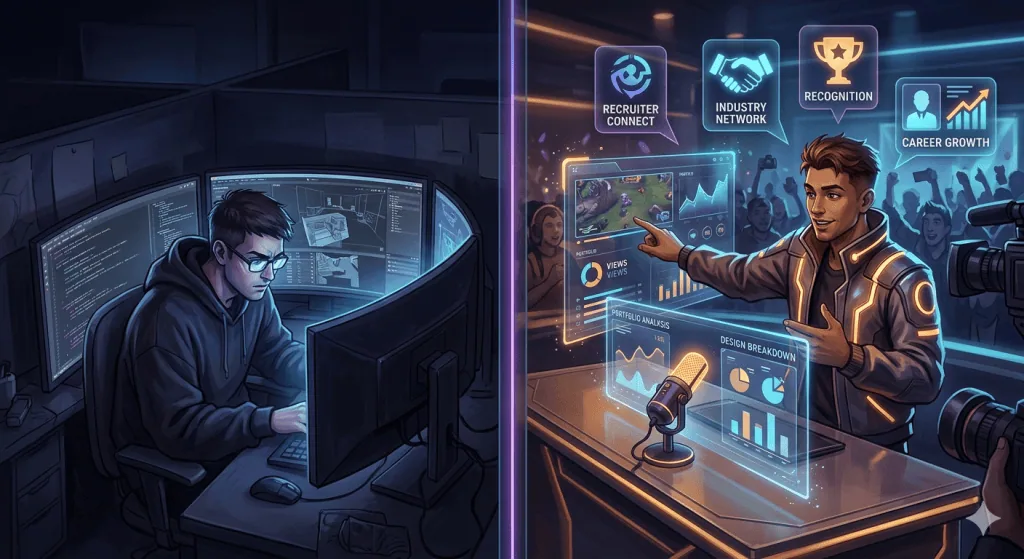
Three months in, he was interviewing with multiple studios. Not because he applied. Because studios found him. Recruiter outreach skyrocketed. He had options.
That wasn’t luck. That was engineered visibility.
Opportunities Will Chase You Instead of You Chasing Them
Here’s what visibility actually does. It flips the power dynamic.
Right now, you’re probably sending applications into the void. You’re hoping someone reads your resume. You’re praying they call you back. You’re waiting. You’re begging.
That’s chase mode. And chase mode is exhausting.
Strategic visibility puts you in attract mode. You post one thoughtful piece about the work you do. Someone sees it. They share it. Someone else sees the share. That person works at a studio that’s hiring. They reach out. Suddenly, YOU’RE receiving offers, not sending applications.
One recruiter reaching out because they saw your work is worth 100 applications you send into the void.
Your Gaming Obsession Becomes Your Differentiator
You’ve probably spent the last decade studying games. You know what makes good design. You can spot talented work a mile away. You have opinions about level structure and narrative pacing and how to keep players engaged.
That knowledge is POWERFUL. But most gaming professionals hide it.
What if you started showing it?
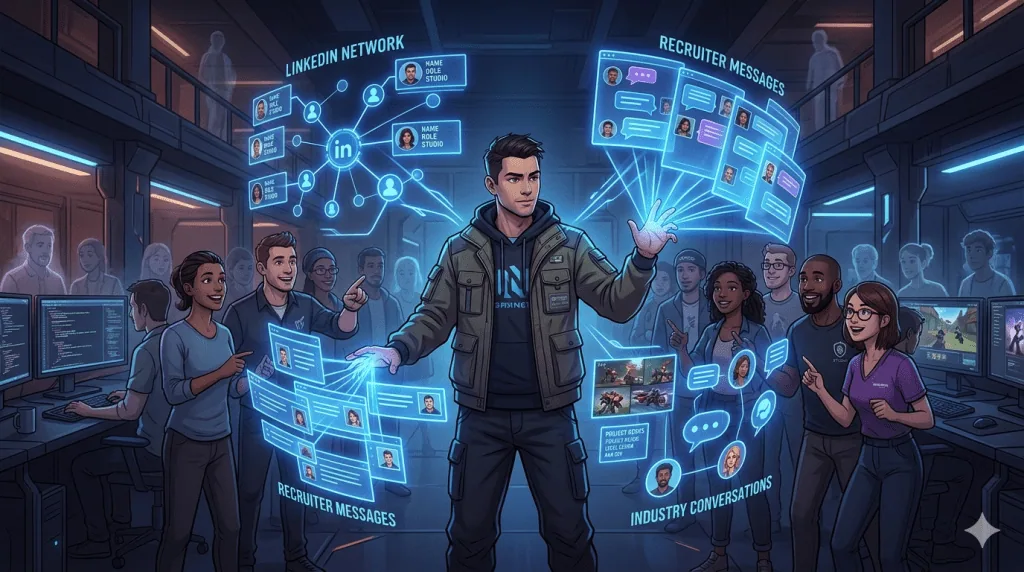
A level designer started breaking down why certain maps in Hollow Knight worked. He analyzed the flow. He talked about intentionality. He shared clips. He broke down the craft behind the art.
Within months, people who knew way more than him were reaching out. Game design experts. Studio leads. People who recognized that he had seen something real. His passion demonstrated expertise in ways a resume never could.
Your gaming obsession isn’t something to be embarrassed about. It’s your ultimate differentiator. It’s what makes you different from everyone else in a crowded job market.
You Can Shatter Gaming’s Toxic Gatekeeping Culture
Gaming has a gatekeeping problem. Experienced professionals stay silent thinking humility serves them better than visibility. That’s not humility. That’s hiding.
And it’s a PROBLEM.
It means junior developers can’t see the path forward. It means they think talent is magic instead of craft. It means good people exit the industry because they can’t figure out how to level up. It means studios can’t find talent because talent is invisible.
Your visibility shatters that. When you share what you’ve learned, you make the path visible. You show people that craft can be learned. You make it possible for the next generation to see themselves in your shoes.
That’s not arrogance. That’s responsibility.
Your Career Stories Deserve to Be Permanent
You’ve probably signed NDAs that prevent you from talking about specific games you shipped. That’s reasonable. But you can still talk about your work.
You can’t name the project, but you can talk about the challenge. You can’t show the code, but you can talk about the architecture. You can’t expose company strategy, but you can talk about what you learned about shipping under pressure.
An incredibly talented person I worked with spent decades building amazing games. When they left, there was nothing online to show for it. Their entire career story died with their NDAs.
Strategic visibility treats your LinkedIn as your permanent career museum. It’s the record of what you’ve built and what you’ve learned. It survives layoffs. It survives studio closures. It survives NDAs.
When you post once a week sharing something you’ve learned, you’re not being arrogant. You’re building your permanent portfolio. You’re making your impact visible. You’re creating the record of your career.
The Math Is Ruthless
Even just posting once a week puts you in the top one percent of active LinkedIn users. Think about that. One post. Seven days. Top one percent.
Most people post never. Most of the people who do post, post rarely. A few share consistently. That consistency is what creates visibility. That visibility is what creates opportunities.
Your Move
LinkedIn isn’t a job board. It’s your career insurance policy. It’s the platform where you engineer visibility before you need it. It’s where you share your war stories without breaking NDAs. It’s where your gaming obsession becomes your differentiator.
Start this week. Write one post about something you learned. Share one war story. Analyze one game you love. Post once a week. Stay consistent.
You’re not being arrogant. You’re building momentum. You’re making yourself visible to the people who need to see you. You’re shattering gatekeeping. You’re documenting your career.
Post.
For the complete LinkedIn strategy, check out our Gaming Professional Visibility Guide.
Read our complete guide: LinkedIn & Personal Brand in Gaming
Frequently Asked Questions
Q: What does it mean when people say LinkedIn is career insurance?
A: In gaming, studios close overnight and projects get cancelled without warning. LinkedIn is your protection against being blindsided. When you’ve built visibility before you need it, opportunities find you instead of you scrambling to find them when the next layoff hits. Your reputation becomes your backup plan.
Q: How should gaming professionals approach sharing their war stories on LinkedIn?
A: You’ve survived crunch, shipped under impossible deadlines, watched studios rise and fall. These aren’t just experiences, they’re your currency. When you share strategically, you’re positioning yourself as the indispensable expert everyone wants to work with. Thousands of professionals behind you are desperate for insider knowledge, and you have it.
Q: Why does your gaming obsession actually matter for your career?
A: The highest performing visibility content comes from professionals sharing genuine expertise about the games they love. A level designer analyzing maps from Zelda and Hollow Knight had experts reaching out, not because he was job hunting, but because his passion demonstrated expertise no resume could. Your gaming obsession isn’t separate from your career, it’s your superpower.
Q: What’s the problem with gaming’s gatekeeping culture and how does LinkedIn fix it?
A: Experienced professionals stay silent thinking humility serves them better than visibility, but that’s just hiding. When you share knowledge and mentor others on LinkedIn, you help the industry while positioning yourself as a thought leader. Every piece of advice becomes proof of your expertise and every person you help becomes part of your network.
Q: How does posting once a week on LinkedIn change your career trajectory?
A: Posting once a week puts you in the top one percent of active LinkedIn users. Your career achievements live beyond your NDAs on a platform where they’re discoverable and searchable. Most gaming professionals let their career stories disappear when they leave companies, but strategic visibility turns your LinkedIn into a permanent career museum that works for you 24/7.