The Layoff That Made My Client $50,000 Richer
Getting laid off can be the best financial decision your company ever makes for you.
Samuel thought he had it all figured out. Years at Riot Games. Stable. Respected. He’d climbed the ladder the way you’re supposed to climb it. Show up. Do good work. Stay loyal. Wait for the company to reward you. But somewhere along the way, loyalty became captivity.
He told me: “I had Stockholm syndrome. I was held captive for so long that I fell in love with my hostage taker.”
When you work in gaming, the industry knows you. It knows you’re here because you love this work. It knows you’d rather be making games than making money. So it exploits that. Your company pays you less than tech pays the same skill set. They crunch you harder because you’re “shipping something amazing.” They gatekeep opportunities because you should just be grateful to be in the room at all.
Loyalty is only noble when it’s mutual. If your company isn’t investing in you, then what you’re calling loyalty is actually captivity.
The Real Cost of Staying
Samuel’s four years at Riot looked like this. A 5% raise over that entire stretch. Constant overwork with little recognition. Being shut out from opportunities because of politics. But he stayed. He thought loyalty would eventually pay off.
It didn’t.
The layoff forced something his career needed anyway. A reset.
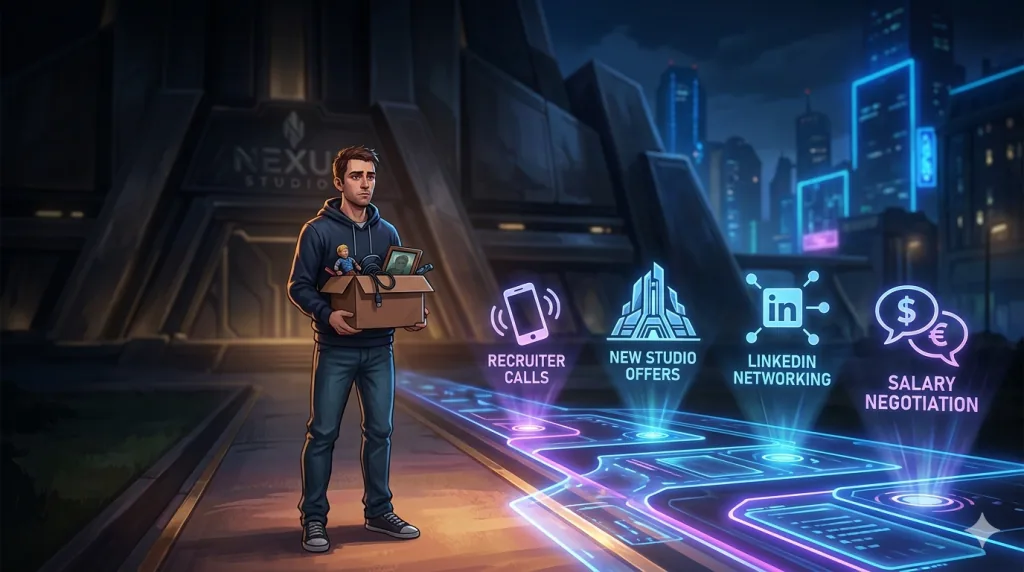
We overhauled his entire strategy from the ground up. Most gaming professionals bury their impact in job descriptions. Samuel had “managed social media campaigns.” That’s invisible. We repositioned it: “increased player engagement by 40% through targeted social campaigns during new character launches.” Specific. Quantified. Real.
Then we got him networking. Not the polite kind. Strategic networking. The kind where he actually talked to people in studios considering his skill set. Within three months, he had offers from Supercell and two other indie studios. He learned something CRITICAL: You can’t just be good at your job. You have to be VISIBLE about being good at your job.
Most gaming professionals think networking is sleazy. They think good work speaks for itself. But visibility isn’t vanity. Visibility is survival. Work that nobody sees might as well not exist.
The Negotiation Edge
Samuel had never negotiated a job offer. Ever. That was another thing the industry conditioned him to skip. Just be grateful they’re offering.
We walked through market comps. We talked about the power of patience. We showed him what he was actually worth in a market that’s now worth $200 to $300 billion.
He walked away with over $30,000 in increased salary. Closer to $50,000 when you factored in benefits. The same skills. A different negotiation strategy.
Gaming professionals have been conditioned to feel grateful just to be in the room. So they don’t negotiate. They don’t ask for what the market actually pays. They don’t leverage their options. They just accept the first number.
That’s the grind that breaks people.
Reframing Your Impact
We worked on impact reframing with Samuel. Instead of saying he “made content,” we repositioned it: he “created the marketing strategy that prevented a major PR crisis.”
Your work in gaming directly impacts millions of players. But most gaming professionals downplay their impact because we’re taught to be humble. Humility is great. But there’s a difference between being humble and being invisible.
Ask yourself this: “What would break if I didn’t do my job for a week?” When you have the answer, you know your actual impact. Samuel stopped chasing perfection and started chasing the PERCEPTION of impact.
One is exhausting. The other is strategic.
From Trapped to Thriving
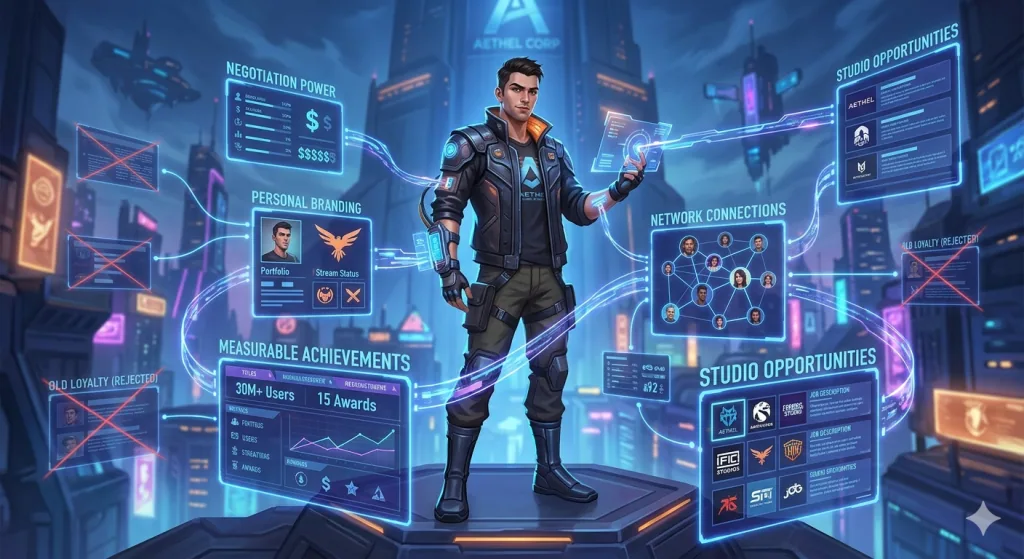
The layoff didn’t break Samuel. It woke him up.
He went from years of underpayment and overwork to having three studios competing for him. From feeling like he had to beg for opportunities to having opportunities chase him. From trapped in gratitude to in control of his own momentum.
The money matters. Fifty thousand dollars is life-changing. But the shift matters more. He learned that his value isn’t what a studio assigns to him. His value is what the market will pay for. And that market is WAY bigger than the one that was holding him captive.
If you’re at a studio right now and feeling that Stockholm syndrome creep in, this is your sign to move. Not because something’s wrong with you. Because something’s wrong with the deal you accepted. Gaming is massive now. The money is there. Your visibility, your impact, your negotiation skills, those are what unlock it.
The layoff was the best thing that happened to Samuel’s career. Let it be a wake-up call for yours too.
Read our complete guide: Laid Off & Landing Better
Frequently Asked Questions
Q: Why do gaming companies get away with paying less than tech companies?
A: Gaming companies exploit passion. They know you’d work for less just to ship games. They’ll crunch you because you’re building something amazing and limit your growth because you should feel grateful to be in the room. The problem is loyalty is only noble when it’s mutual, and most studios aren’t building a mutual relationship.
Q: What’s the impact reframing framework and why does it matter?
A: Instead of saying you made content, you reposition it as creating the strategy that prevented a PR crisis and maintained player trust. When you fix a bug, you’re not just coding, you’re preserving the player experience. This shifts how managers see your value and why you deserve more compensation.
Q: How do you calculate your actual impact when negotiating a raise?
A: Ask yourself “What would break if I didn’t do my job for a week?” That answer becomes your leverage in negotiations. It forces you to see your work through a strategic lens, not just effort or responsibilities, and gives you concrete talking points about why you deserve more.
Q: Is it really okay to negotiate a job offer in gaming?
A: Absolutely. The people who ask get more, period. Compensation isn’t about your worth as a person, it’s about leverage. Gaming has convinced us to feel grateful just to be in the room, but the industry is worth 200 billion dollars. The money exists, most gaming professionals just never learned to ask for it because we’ve been conditioned to accept crumbs.
Q: How do you shift from self-promotion feeling gross to it being survival?
A: Visibility isn’t vanity, it’s survival. In an industry where teams are huge and everyone’s heads down shipping, your work won’t speak for itself. Displaying your impact is communication, not bragging. If you don’t tell people what you’ve accomplished, how will they know what you’re capable of when opportunities come around?