How a Gaming Career Coach Actually Helps You (No Fluff, No BS)
What “Game Industry Career Coaching” Actually Covers
The most successful people in gaming have a secret they never talk about. They’ve got mentors, coaches, and insiders giving them advice behind the scenes. But when they celebrate on LinkedIn? “Hard work pays off.” Sure.
The gaming industry sells this myth of the self-made genius. We worship the indie developer who built a hit game in their garage. But that’s not reality. Everyone successful has help. The ones landing dream jobs at Blizzard, Epic, and EA weren’t just grinding harder than everyone else. They had people guiding them.
So let’s talk about what a gaming career coach actually does. Not the fluffy motivational stuff. The real work.
Why YouTube Videos and Online Courses Aren’t Enough
You’re smart. You’ve probably tried everything. Watching YouTube videos, reading articles, maybe even taking online courses. So why are you still stuck?
Because you’re missing the personalized feedback loop. Would you expect to get good at League of Legends by only watching pro player streams? Of course not. You’d get coached. You’d practice with feedback. You’d have someone who can see what you can’t see about yourself.
I see the same three mistakes over and over. If you’re trying to land your first role, it’s also worth keeping an eye on open roles for people breaking in while improving your positioning and interview skills.
Candidates optimizing for the wrong metrics, like focusing on getting past ATS systems instead of impressing actual humans. They have massive blind spots, like talking too much about technical skills and not enough about impact. And they’re treating job hunting like solo queue instead of a team game.
A good coach doesn’t just hand you information. They help you course-correct in real time.

Repositioning Your Story (Not Changing Who You Are)
Here’s something even more powerful that most people miss. Coaching isn’t about changing who you are. It’s about positioning who you ALREADY are in the right way.
Take Justin. An art leader with a list of shipped titles the length of your forearm. He’d been laid off from Sony after 18 years. He thought he was too old and couldn’t compete.
First thing I did was snap him out of that thinking. I showed him that companies would be surprised that somebody of his caliber was even available.
Then I completely changed his job search strategy. Before applying again, we also reviewed our free gaming job board to identify studios that were actively hiring people with his experience.
Senior roles aren’t gotten by applying blindly on Indeed. They’re gotten through networking. I had him dust off his contact list and start reconnecting.
Two weeks later, he was deep in conversations with Epic for a better title, and he was in panel interviews at Sony.
Or take Carl, a senior game producer who felt like he was just managing paperwork. Burnt out, thinking his job was all about timelines and spreadsheets. After talking with him, I realized his real strength was something completely different. He was the tastemaker. He ensured that IP games delighted players with resonance and authenticity. So we built his entire positioning around that unique angle. He became the producer who protects the soul of beloved franchises.
The coaching wasn’t about making him someone new. It was about showing the world who he already was.
The Math on Coaching ROI (It’s Not Even Close)
I know what you’re thinking. Isn’t coaching expensive? Let me put this in perspective.
One of my clients, a design lead who felt stuck in his role, got promoted and secured a 25% raise after three months of coaching. If he was making $80K, that’s $20,000 more per year. Every year. For the rest of his career. That’s an extra $400,000 over a 20-year career.
But here’s the real kicker. The network and positioning you build lasts your entire career. I have clients who worked with me 3 years ago still getting opportunities because of connections we made and personal brands we built. That’s not a one-time ROI. That’s compound interest on your career.
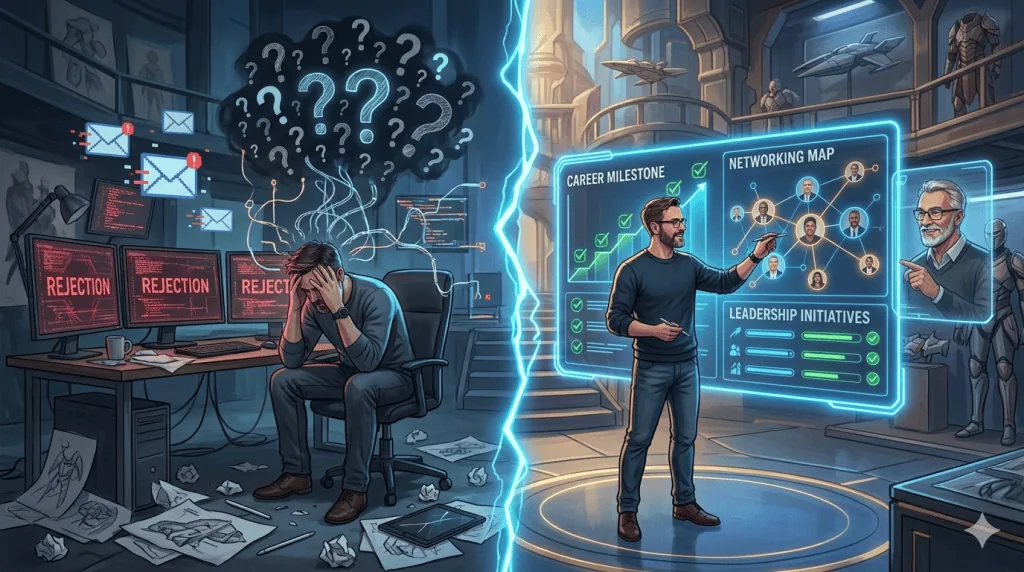
And the cost of NOT getting coaching? Months of frustration. Confidence hits from rejections. Burnout from spinning your wheels.
How to Spot a Good Coach (and Avoid Getting Scammed)
Not all coaches are worth your time. Here’s exactly what to look for.
Industry experience. You want someone who’s actually worked in gaming, not just someone who read about it. Ask them what studios they’ve worked at and what roles they held.
Specific results. Ask for case studies. How many people have they helped? What companies? What roles? What was the timeline? If they can’t give you specific examples, run.
Their own network. A good gaming coach isn’t just teaching you. They’re connecting you. They should have relationships with recruiters and hiring managers who can open doors.
Customized approach. If they’re selling you a one-size-fits-all program, that’s a red flag. Your path into Riot Games is different from your path into an indie studio.
And watch for red flags. Guarantees (nobody can guarantee you a job), generic advice that applies to any industry, or pressure to sign up immediately.
Your Dream Job Isn’t Going to Find You
The most successful people in gaming aren’t just lucky or gifted. They invest in coaching because they understand it’s the fastest path to their goals. You can keep grinding alone, or you can do what the pros do. Get someone in your corner who’s been on the inside.
Your dream job is out there. The question is how fast you want to get there. Many of the strategies discussed here come directly from Chris’s path from Riot Games into coaching gaming professionals globally through Unstoppable Guild.
If you want the structured version of this help, see the Career Sprint for individuals or consulting for studios and teams.
Read our complete guide: Gaming Industry Career Coaching Guide
Frequently Asked Questions
Q: What does a gaming career coach actually do?
A: A gaming career coach gives you the personalized feedback loop you can’t get from YouTube videos or online courses. They reposition your story to show your real value, fix blind spots in your resume and interview approach, and connect you with the right people in the industry. It’s tactical guidance tailored to your specific situation, not motivational fluff.
Q: Is a gaming career coach worth the money?
A: Do the math. One of my clients got a 25% raise after three months of coaching. On an $80K salary, that’s $20,000 more per year for the rest of his career. The network and positioning you build lasts forever. I have clients from 3 years ago still getting opportunities from connections we made together. That’s compound interest on your career.
Q: How do I find a legitimate gaming career coach?
A: Look for four things. Industry experience (they should have actually worked in gaming studios). Specific results with case studies and names. Their own network of recruiters and hiring managers. And a customized approach, not a one-size-fits-all program. If they guarantee you a job or pressure you to sign up immediately, run.
Q: Why can’t I just prepare for gaming interviews on my own?
A: Because you can’t see your own blind spots. Most candidates I work with are optimizing for the wrong things, like getting past ATS systems instead of impressing humans. They talk too much about technical skills and not enough about impact. A coach sees your story with fresh eyes and helps you understand why it’s actually extraordinary.
Q: Do senior gaming professionals need career coaching too?
A: Especially senior professionals. After years in the industry, you start seeing your own story as ordinary because you live it every day. Senior roles aren’t gotten by applying blindly online. They come through networking and repositioning. A coach helps you dust off your contact list and shows companies why someone of your caliber being available is a big deal.
Q: Is it worth paying for a career coach?
A: If the coaching changes your trajectory, the math isn’t close. One client secured a promotion and a 25% raise after three months of coaching, which on an $80K salary is $20,000 more every year after. The positioning and network you build keep paying out for the rest of your career. The real comparison isn’t against the fee, it’s against months of spinning your wheels, rejection hits, and staying underpaid in the meantime. It’s only worth it with a coach who has real industry experience, so vet that first.