AI and Gaming Jobs: Stop Competing With Tools, Start Owning Problems
Companies aren’t waiting to figure this out ethically. They’re already moving.
I watched studios lay off hundreds and replace them with tools that cost 20 dollars a month. They didn’t invent new processes first. They didn’t hire carefully. They cut people, implemented AI, and shipped faster.
Everyone’s telling you “just be more creative.” But guess what? Creative directors are getting replaced. Concept artists are getting replaced. Writers are getting replaced.
The hard truth is this: what used to take 12 people three months now takes two people in two weeks. That’s not a knock on creativity. That’s just the reality of the multiplier effect.
But here’s the thing that separates the people who are going to be FINE from the people who are going to panic: they understand the wave pattern.
The AI Adoption Wave
AI follows a predictable pattern of displacement. If you understand the pattern, you can stay ahead of it.
a
Wave one was five years ago. Repetitive tasks got automated first. Data entry, simple asset generation, routine bug checking. People who only did those things got cut.
Wave two is right now. Cognitive work is getting automated. Writing legal briefs, creating marketing strategies, drafting documentation, generating code snippets. The work that used to require expertise and thinking is now something AI can do faster.
Wave three is coming. Relationship work. Therapy sessions. Sales calls. Complex negotiation. The work that requires human judgment and interpersonal skill. This is years away but it’s coming.
Right now, you’re in wave two. And the game doesn’t end. You either evolve or you get replaced.
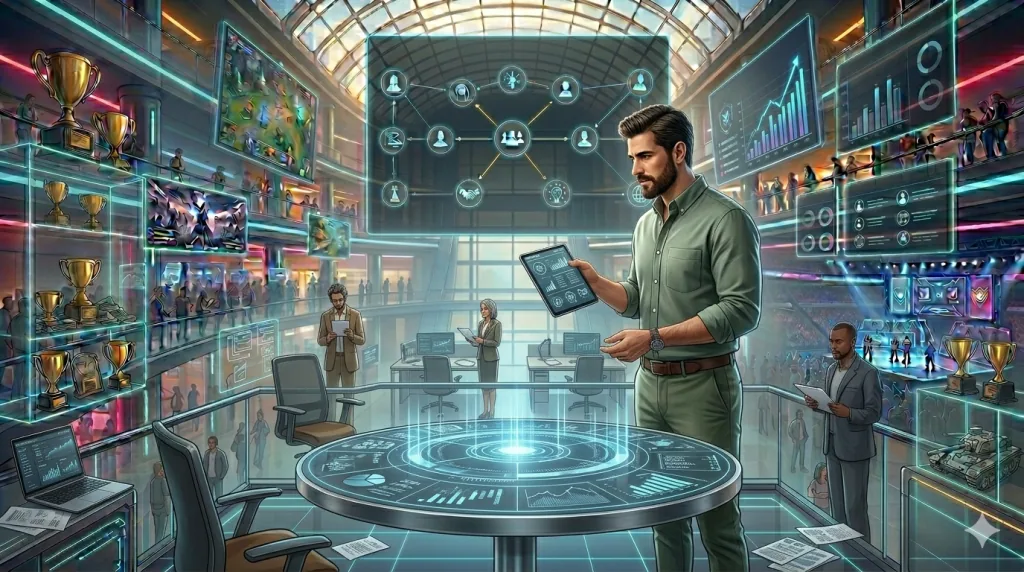
The AI Multiplier Effect
Here’s what actually happened. A senior game designer told me: “AI handles my documentation, so now I spend 100% of my time designing instead of 60%.”
That’s the multiplier. He didn’t get fired. He got 40% more productive. His output doubled. The work he cared about, the work only he could do, became his entire job.
The mistake is thinking “AI is doing my job now.” That’s not what happened. AI is doing the busy work. The question is: what do you do with the time you just freed up?
If your answer is “nothing different,” then yeah, you’re replaceable. If your answer is “I go deeper on the work that only I can do,” then you just leveled up.
The New Hierarchy
Here’s the hierarchy of work in the age of AI.
At the bottom: Problem solver. You get a problem, you solve it. This is the most replaceable. AI can do this.
In the middle: Problem owner. You define problems for your team to solve. You decide what’s worth fixing. You set the agenda. AI can’t do this yet.
At the top: Problem creator. You decide what problems are worth solving in the first place. You’re not solving problems that exist. You’re identifying the problems that matter.
The move is clear: stop being a problem solver. Become a problem owner. Then become a problem creator.
The 90-Day Plan
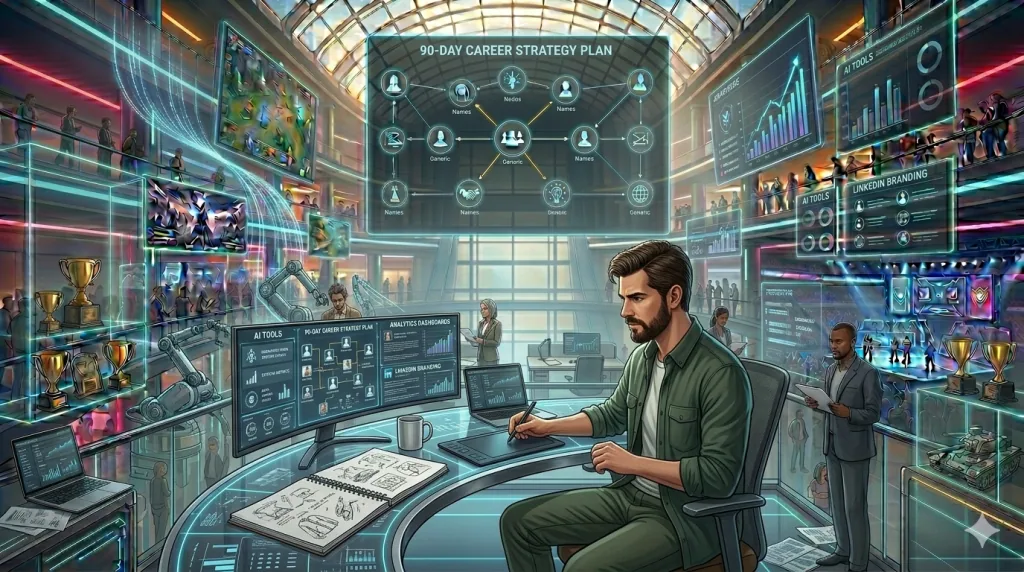
You don’t need to panic. You need to act. Here’s the move.
First, audit your work. Make a list of all the problems you solve in a typical week. Not the deliverables. The problems. Document them.
Second, find patterns. You probably solve the same categories of problems over and over. If you’re a programmer, you might solve performance problems, architecture problems, or debugging problems. If you’re a designer, you might solve feedback problems, pacing problems, or economy problems.
Third, go deeper. Pick the pattern that resonates most. The one you genuinely care about. Start researching it. Read about it. Talk to people about it. Become the expert in that category.
Fourth, start talking about it. On LinkedIn, in meetings, in conversations. When you talk about a category of problems constantly, people start associating you with solving those problems. You become the person they call.
Fifth, use AI to amplify. Now that you own this problem space, use AI to move faster. Use it to test solutions. Use it to document thinking. Use it to handle the repetitive parts so you can focus on the hard thinking.
This is the difference between being replaced and becoming more valuable.
The Brutal Truth
AI is going to replace some jobs. It’s going to replace the work that’s purely about executing a known solution. But it’s not going to replace the people who decide what problems matter.
The people who will be fine are the ones who move before they have to. Who start thinking about what only they can do. Who start owning problem spaces instead of solving individual problems.
The people who panic are the ones who wait until they’re laid off to figure this out.
You have the information now. You have time. You have a path forward.
What you do with that is on you.
Read our complete guide: Navigating Layoffs in Gaming
Frequently Asked Questions
Q: Which jobs are most at risk from AI replacing workers?
A: The knowledge work getting hit hardest right now isn’t the obvious stuff like data entry. It’s creative work, management work, the work we thought made us irreplaceable. Creative directors are getting replaced by AI that generates concepts faster than they can sketch. Project managers are getting replaced by AI assistants that never miss deadlines and don’t need coffee breaks.
Q: How does the AI wave actually progress?
A: Wave one hit years ago with repetitive tasks and customer service. Wave two is happening right now with cognitive work like legal briefs, medical diagnoses, and marketing strategies. Wave three is coming for relationship work like therapy, sales calls, and performance reviews. Whatever you think makes you valuable today, AI will be doing tomorrow, so you need a different strategy.
Q: What’s the one career strategy that actually makes you AI-proof?
A: Become the person who decides what problems are worth solving. AI is amazing at execution but terrible at problem definition. It can’t understand business context, human needs, or take responsibility for decisions the way you can. Your job security comes from what problems you own, not what tasks you can do.
Q: What’s the AI multiplier effect and how do I use it?
A: Let AI handle documentation, research, and analysis so you can spend 100% of your time on what only you can do. A game designer using this effect went from 60% documentation and 40% design to 100% pure design work. You’re not trying to beat AI at what it does, you’re using it to amplify what makes you uniquely valuable.
Q: How do I move up the new career hierarchy?
A: Stop being a problem solver who just executes faster. Become a problem owner who understands entire categories of challenges deeply and gets called for everything in that domain. Better yet, become a problem creator who identifies new problems before anyone even realizes they exist. That’s the difference between replaceable and irreplaceable.
Q: Will AI replace game designers?
A: AI will replace game designers who only execute, not the ones who decide what to build. What used to take 12 people three months now takes two people in two weeks, so execution-only work is shrinking fast. But the multiplier cuts the other way too: designers who let AI handle the busy work and go deeper on judgment, taste, and problem ownership become more valuable, not less. The move is to stop being a problem solver and become a problem owner.