Perfectionism Is Killing Your Game Dev Career (How to Ship and Move On)

As someone who’s navigated the complex world of gaming for years, from launching major titles to organizing large-scale esports events, I’ve seen how perfectionism can be both a driving force and a paralyzing obstacle. The pursuit of the perfect moment to start a project is a common trap that many aspiring game developers fall into. Today, I want to address this issue and provide practical advice for overcoming it.
The Perfectionism Trap in Game Development
The gaming industry is known for its innovation and creativity, but it’s also a field where perfectionism can easily take root. Here’s why waiting for the “perfect moment” can be detrimental:
- Lost Opportunities: In the fast-paced world of gaming, waiting too long can mean missing out on emerging trends or market gaps.
- Stifled Creativity: Perfectionism often leads to over-planning and under-executing, limiting the natural flow of creative ideas.
- Increased Pressure: The longer you wait, the more pressure you put on yourself to create something “perfect,” which can be paralyzing.
During my time in the industry, I’ve seen numerous talented individuals struggle with this. One memorable example was a brilliant game designer who spent years refining his concept without ever starting development. By the time he felt ready, similar games had already flooded the market.
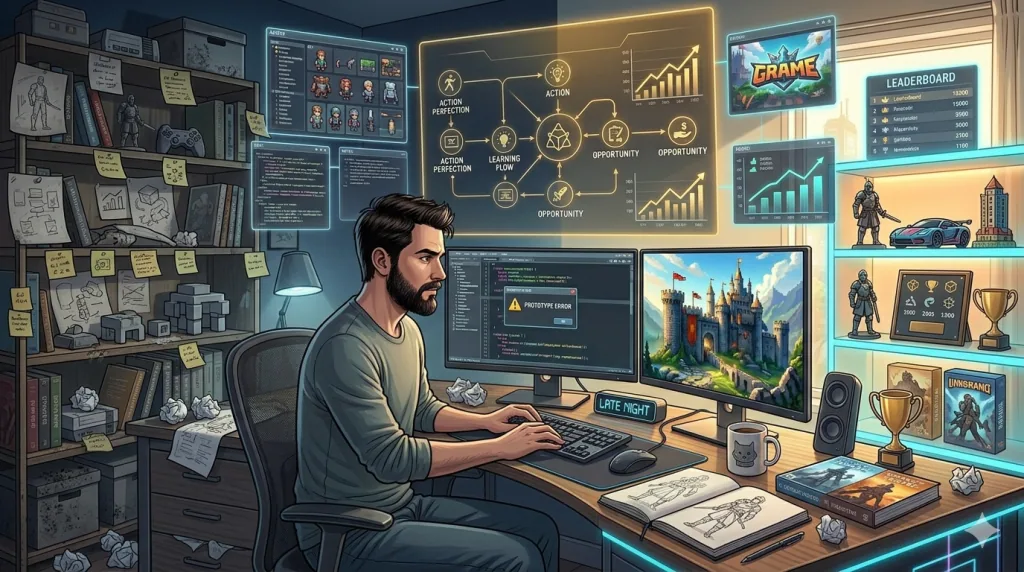
Embracing Imperfection: The Key to Progress in Gaming
The reality is, game development is an inherently iterative process. Some of the most successful games in history started as imperfect prototypes. Here’s how embracing imperfection can lead to success:
- Start Small, Iterate Often: Begin with a basic prototype and improve it gradually. This approach allows for early feedback and course correction.
- Embrace the MVP (Minimum Viable Product): Focus on creating a core gameplay loop that’s fun, even if it’s not fully polished.
- Learn from Failures: Every “imperfect” attempt teaches valuable lessons that contribute to your growth as a developer.
Consider the case of “Minecraft,” which began as a rudimentary block-building game. Its creator, Markus Persson, released early versions to the public, iterating based on player feedback. This approach led to one of the most successful games of all time.
Taking Action: Practical Steps for Game Developers in 2025
As we’re already a week into 2025, it’s crucial to start taking action now. Here are some practical steps to combat procrastination and make progress on your game development projects:
- Set Micro-Goals: Break your project into small, achievable tasks. Completing these regularly will build momentum and confidence.
- Establish a Routine: Dedicate specific times for game development, even if it’s just an hour a day. Consistency is key.
- Join Game Jams: Participate in game jams to force yourself to create something in a limited timeframe. This can be an excellent way to overcome perfectionism.
- Find an Accountability Partner: Connect with other developers who can check in on your progress and offer support.
- Use Project Management Tools: Utilize tools like Trello or Jira to track your progress and stay organized.
- Embrace Version Control: Use Git or similar systems to track changes, allowing you to experiment without fear of “ruining” your project.
- Share Your Work Early: Post your progress on forums or social media. Early feedback can be invaluable and motivating. Don’t wait for the perfect portfolio before applying, stop waiting and browse open roles to understand what studios are hiring for today and what skills they’re value most.
- Throughout my career in gaming, I’ve seen how these strategies can transform hesitant beginners into successful developers. One inspiring example is a developer I mentored who struggled with perfectionism. By committing to working on his game for just 30 minutes every day, he managed to release his first indie title within a year, something he had been putting off for years.
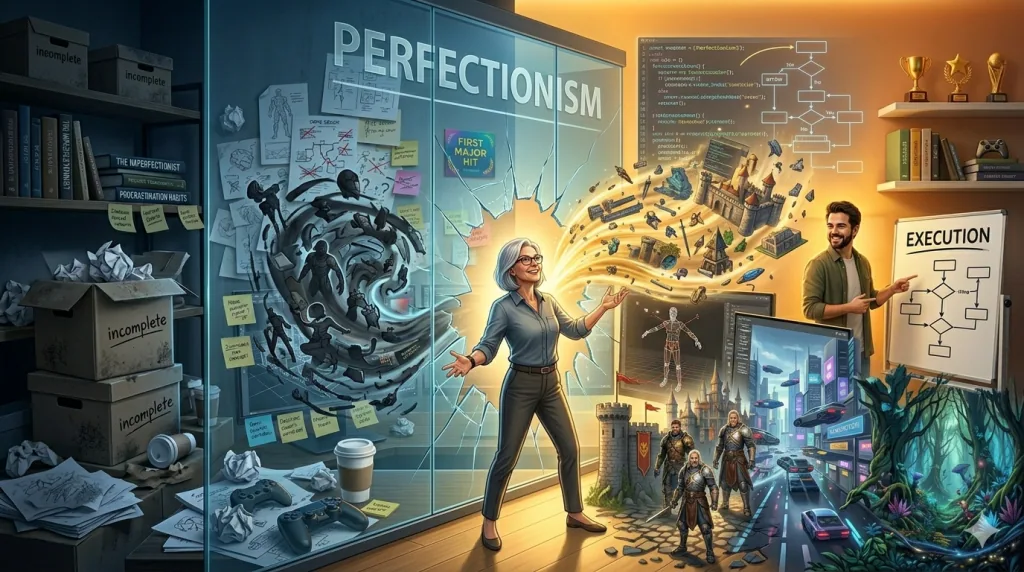
Remember, in the world of game development, done is often better than perfect. Every successful game you’ve played started as an imperfect idea that someone decided to act on.
Are you ready to overcome perfectionism and make 2025 the year you bring your game idea to life? Start by setting a small, achievable goal for this week. It could be as simple as writing down your game concept or creating a basic sprite.
Share your commitment in the comments below. Let’s create a community of action-takers who support each other in turning game development dreams into reality. What small step will you take today to move your project forward?
Your future in game development starts now – not when conditions are perfect, but in this very moment. Embrace the imperfection, start small, and watch your ideas grow into something amazing. The gaming world is waiting for your unique vision!
Read our complete guide: Gaming Professional Visibility
Frequently Asked Questions
Is perfectionism common among game developers?
Extremely common. Game development attracts detail-oriented people who care deeply about quality. That attention to craft is a strength, but when it prevents you from shipping work, applying for roles, or sharing your portfolio, it becomes a career blocker. The line between high standards and perfectionism paralysis is thinner than most people realize.
How do I overcome perfectionism in my game dev career?
Start by recognizing that done beats perfect in almost every career context. Set deadlines for yourself that force you to ship, even if it’s not flawless. Get feedback early instead of polishing in isolation. And reframe mistakes as data, not failure. The most successful gaming professionals are prolific shippers, not perfect planners.
Does perfectionism hold back career growth in gaming?
Yes. Perfectionism leads to missed opportunities: jobs you didn’t apply for because your resume wasn’t perfect, projects you didn’t share because they had rough edges, conversations you didn’t start because you weren’t sure you were ready. Every delay is a compounding loss of visibility and momentum.