The LinkedIn Shift That Gets Gaming Recruiters to Message You First
You’re not being overlooked because you’re unqualified. You’re being overlooked because you’re invisible. And in today’s hiring market, invisibility is the same as irrelevance.
I’ve reviewed thousands of resumes and helped hundreds of people land their dream job. The pattern is clear. The people who get found aren’t always the most talented. They’re the most visible. And most game devs treat LinkedIn like a dusty online resume. A headline that says “game designer passionate about games.” A summary that’s either blank or a laundry list of tools.
That doesn’t work anymore. Your LinkedIn needs to show up like your own personal landing page. Here’s how to make the shift in five steps.
If your profile still looks like an online resume instead of a recruiter magnet, start with our complete Gaming LinkedIn Guide. It walks through the foundation before you optimize the five shifts below.
Rewrite Your Headline (It’s Your Player Class)
Your headline isn’t your job title. It’s your player class. Not “designer.” Not “producer.” That’s just outward-facing gear. Your class is what role you play on the team and what you bring to the fight.
Instead of “Senior UX Designer,” try “UX Designer Simplifying Player Onboarding in Complex Games.” Instead of “Product Manager at XYZ,” try “Live Ops PM Driving Retention and Monetization for Mobile F2P.”
See the difference? One tells me a title. The other tells me your zone of genius. Ask yourself: “If a hiring manager had 10 tabs open, what would make them click on me?”
This is really a visibility problem, not a talent problem. If opportunities keep going to people who seem less qualified, you’re probably experiencing The Visibility Gap rather than a skill gap.
Turn Your Summary Into an Origin Story
Your summary section is not a bio. It’s your origin story. You need to communicate four things fast: who you are, what problem you solve, proof that it works, and what you’re looking for next.
Here’s what that looks like for a mid-level narrative designer: “I help studios craft immersive game worlds that players want to get lost in. Over the last 6 years, I’ve written branching dialogue, cinematic scripts, and world lore across three shipped titles, including a mobile RPG with 2 million downloads. I specialize in weaving player decisions into emotional payoffs. I’m now looking to bring my narrative chops into a live game team.”
That’s clarity. That’s direction. And that’s how you get DMs that start with, “Hey, we’re hiring someone like you.”
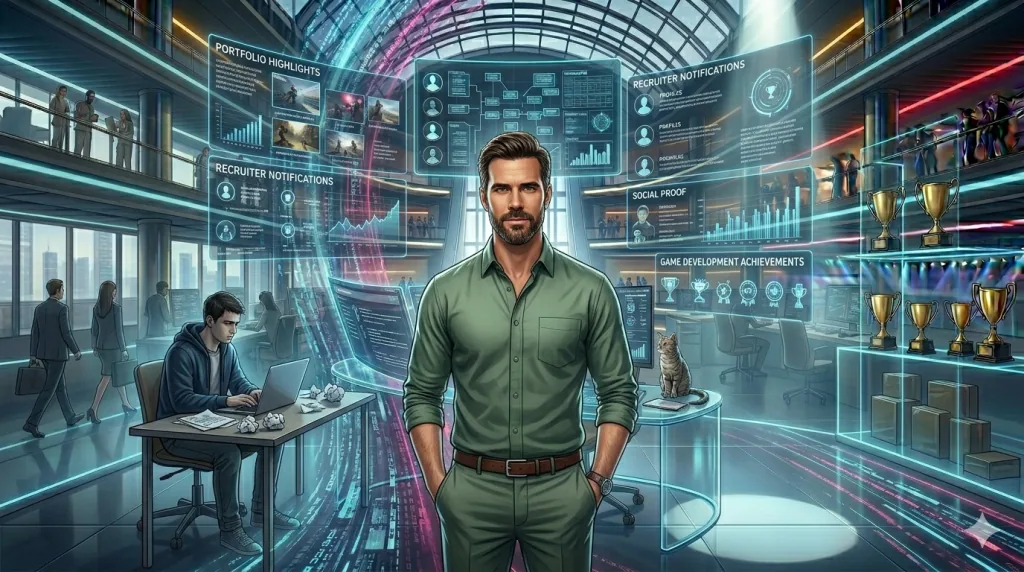
Build Social Proof That Creates Instant Trust
Here’s what most game devs forget. Recruiters don’t just want talent. They want trust. And social proof creates instant trust. Think of it like this: when you buy a game, you check the reviews, right? Recruiters do the same thing.
Tag your collaborators. Post something you worked on and give your teammates credit. “Shout out to Ryan and Lisa for the insane polish they brought to the endgame boss on Project Echo.”
Talk about team results. “In Q2, our art pipeline improvements helped the team hit asset deadlines three weeks faster across the board.”
Use public praise. If a colleague messages you with kind words, ask if you can post or screenshot it. Add it to your featured section.
I call this borrowed trust. You’re not boasting. You’re showing the network effect of your work.
Post Once a Week (That’s the Battlefield)
Updating your profile is like polishing your armor. Posting once a week? That’s actually stepping onto the battlefield.
Don’t overthink it. You don’t need to be a guru. You just need to show up consistently so people remember your face, voice, and how you think. Here are post types that work:
Reflection post. “What our team learned from killing a feature 2 days before lock.”
Inside look. “Why we replaced 70% of our tutorial with an NPC side quest and how retention jumped.”
Reaction post. “Epic’s latest monetization update is wild. Here’s what it could mean for creators like us.”
Gratitude post. “Major respect to our QA folks. Caught a blocker I missed for three builds straight.”
LinkedIn rewards relevance and rhythm. When you show up consistently, people start thinking, “Hey, that person knows their stuff.”
Posting consistently gets you noticed, but conversations create opportunities. Once your profile attracts attention, use our Gaming Industry Networking Guide to turn visibility into real relationships and referrals.
The Professional Presence Shift
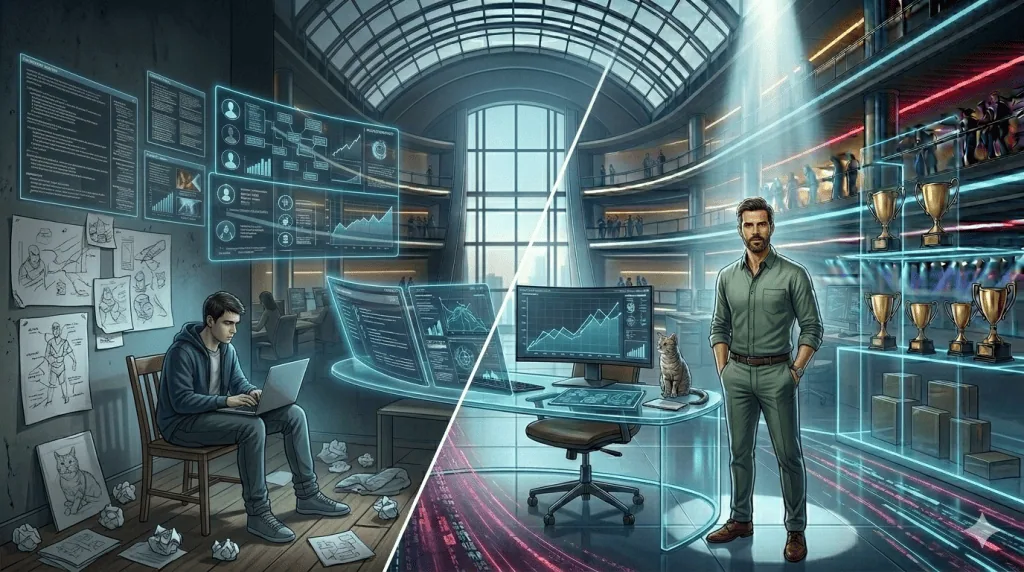
Headline: lead with value, not vanity. Summary: tell a story, not a checklist. Social proof: tag, quote, and spotlight your impact. Weekly posts: stay visible without burning out.
Once you implement this, you stop hoping someone will find you and start becoming unmissable.
Here’s the truth most gaming professionals don’t want to hear. Your skills are probably fine. Your portfolio is probably solid. But nobody can hire you if they don’t know you exist. The competition isn’t between you and someone more talented. It’s between you and someone more visible. And visibility is a skill you can build, one headline rewrite, one post, one tagged collaborator at a time.
That’s the shift. From invisible to undeniable. And once you make it, you never go back to waiting by the phone again.
Read our complete guide: LinkedIn & Personal Brand for Gaming Guide
Q: How do I get gaming recruiters to message me on LinkedIn?
A: Rewrite your headline to show your value, not your title. Turn your summary into a clear origin story. Build social proof by tagging collaborators and sharing team wins. And post once a week so recruiters remember who you are.
Q: What should my LinkedIn headline say as a game developer?
A: Not your job title. Your headline should describe what you bring to the fight. Instead of “Senior UX Designer,” try “UX Designer Simplifying Player Onboarding in Complex Games.” Make it so a hiring manager with 10 tabs open would click on yours.
Q: How often should a gaming professional post on LinkedIn?
A: Once a week is enough to stay visible without burning out. Share reflections on your work, inside looks at your process, reactions to industry news, or gratitude for your teammates. LinkedIn rewards relevance and rhythm.
Q: What is social proof on LinkedIn for game developers?
A: Social proof is borrowed trust. Tag collaborators when you share work, highlight team results with numbers, and showcase public praise from colleagues. Recruiters want trust, not just talent. Reviews sell games and recommendations sell candidates.
Q: What should I include in my LinkedIn summary as a gaming professional?
A: Four things: who you are, what problem you solve, proof that it works, and what you’re looking for next. Skip the laundry list of tools. Write it like a landing page for your career that makes recruiters want to reach out.