How to Pass Your Gaming Job Interview: The One Thing Hiring Managers Never Forget
What’s the one thing that changes gaming interview outcomes?
It’s not your skill. It’s your origin story. There’s one thing hiring managers never forget, and it’s the real story of how you got here and why you care about games. An answer like “I’m hardworking, detail oriented, a great team player” sounds like everyone else’s. Your story is what they remember.
Prepared candidates look lucky.
Unprepared candidates look average.
The difference is visible from the first question. Most game devs know this intellectually. They nod along. Then they walk into the interview and panic.
Here’s what you need to know: there’s one thing hiring managers never forget. And it’s not your skill.
The Seven Questions You Already Know
They’re coming for you. You can’t avoid them.
Tell me about yourself. What are your greatest strengths. What are your weaknesses. Why do you want to work here. Tell me about a conflict you’ve handled. What’s your greatest achievement. What do you want to ask us.
Most people answer these on the fly. Seven questions. Same ones every time. Different studios, same questions.
While preparing your answers, it’s also worth researching the studios hiring right now so you can tailor your examples to the companies you’re interviewing with.
Most people answer these on the fly. They wing it. They think they can improvise their way through because the question is basic.
The Unfair Advantage
Question one is where you win or lose.
“Tell me about yourself.”
Watch what happens with an average answer: “I’m hardworking, detail oriented, a great team player. I’ve got five years in game dev. I really love the creative process.”
The hiring manager checks out. They’ve heard this 47 times. You sound like everyone else.
Now watch what happens with a great answer.
You tell them your origin story.
Not your resume. Your story.
“Before I ever spoke English, I spoke video games. I was that kid who couldn’t follow every word adults were saying, but I could walk into an arcade and be instantly part of a shared world.”
Now they’re listening. They’re leaning in. They want to know what comes next.
This is the thing they remember. Not your GPA. Not your technical skills. Your story.
Why do stories matter more than competency in a gaming interview?
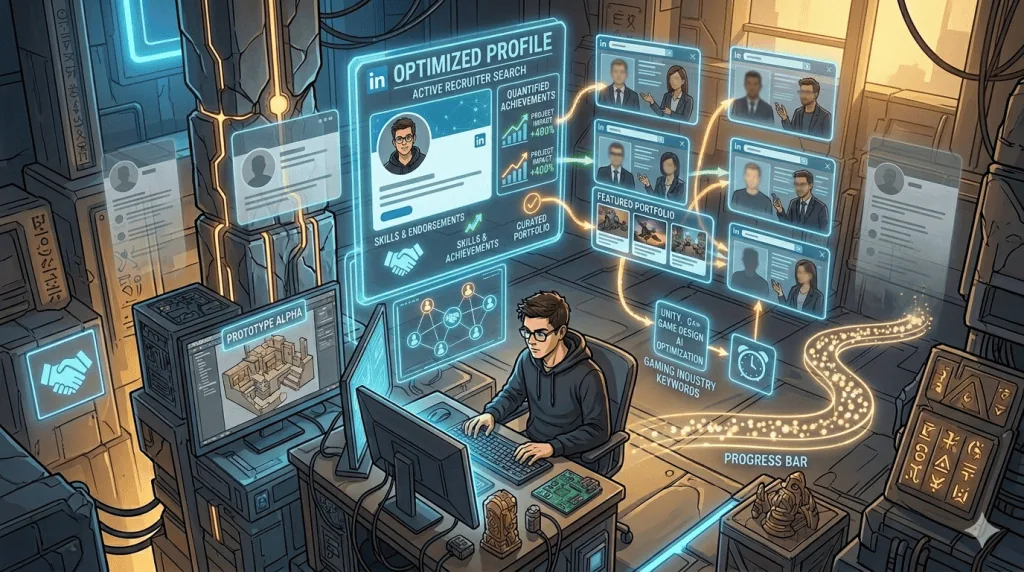
Chemistry before competency. They can test your competency. They can see your portfolio and your LinkedIn profile before you ever say hello. What they can’t test is whether you’re someone they want to work with for eight hours a day. A good story creates that connection. It makes you real and memorable.
That’s the rule. If the hiring manager doesn’t feel a connection in the first five minutes, nothing else you say will matter as much.
Everything else is just execution.
How do you prep for a gaming interview in two hours?
Split the two hours into three levels. Spend 45 minutes drafting and rehearsing a two-minute origin story. Spend 45 minutes building a proof library of three wins in SPEAR format: situation, problem, example, action, result. Spend the last 30 minutes preparing two or three thoughtful questions so you can reverse interview them.
You have two hours to prep. Use them.
Level one (45 minutes): Draft your origin story.
This is the answer to “Tell me about yourself.” Not a joke. Not a cute story. Your actual origin story. How did you get here? What shaped you? Why do you care about games?
Write it out. Edit it down. Make it two minutes long. Practice it until you can say it without thinking.
Level two (45 minutes): Build your proof library.
Pick three solid wins from your career. Not the biggest one. The best one. The story that shows who you are.
Use SPEAR format.
Situation. Problem. Example. Action. Result.
“I was working on a community feature [Situation]. Players were leaving because the engagement was flat [Problem]. I designed a daily challenge system [Example]. Rolled it out in beta with 200 players [Action]. Retention went from 42 to 68 percent [Result].”
That’s a story. That’s proof. That’s what they remember.
Prep three of these. Different situations. Different wins. Same format.
Level three (30 minutes): Reverse interview them.
You’re supposed to ask questions at the end. Most people phone it in. Ask something generic. Waste the moment.
Prepare 2-3 thoughtful questions. Show them you’ve done your homework.
“What does success look like in this role in the first 90 days?”
“Can you walk me through what a typical week looks like?”
“What’s the biggest challenge the team is trying to solve right now?”
These questions do two things. They give you real information. And they show them you’re thinking strategically about the role.
You can read more about Chris’s full background and hiring experience in gaming here.
The Framework
Your opening story is your competitive advantage. It’s the moment when luck becomes irrelevant because you’ve already won the connection.
Your proof library is your insurance policy. Whatever they throw at you, you’ve got a story that answers it. A story with numbers. A story with impact.
Your questions are the closer. The moment you remind them that this is a conversation, not an interrogation. That you’re evaluating them as much as they’re evaluating you.
Most candidates walk in hoping to get lucky.
You’re walking in prepared. There’s a difference.
These interview frameworks are also part of Chris’s coaching programs for gaming professionals navigating career transitions.
Your resume gets you the interview. Start with the gaming resume guide.
The Move
This week: Write your origin story. The one that explains who you are and why you care about games. Two minutes max. Practice it five times.
Next week: Identify three wins and build them into SPEAR stories. Numbers matter. Impact matters. Make it specific.
By interview day: Have 2-3 thoughtful questions ready. Show them you’ve done your homework. Show them you’re thinking.
Prepared candidates don’t stress. They know what’s coming. They’ve done the grind. They show up and it’s just execution.
That’s the energy you want.
For a complete interview prep system, check out our Gaming Interview Prep Guide.
Frequently Asked Questions
Q: What actually separates people who pass interviews from people who bomb them?
A: Prepared candidates look lucky, unprepared candidates look average. You already know 80 percent of the questions coming, so the advantage goes to whoever practices how to introduce themselves and tell their story. Luck in career terms is simply preparation meeting opportunity.
Q: How do I nail the “tell me about yourself” question?
A: Don’t answer with resume speak. Instead, give an origin story that reveals what shaped you, what drives you, how you behave under pressure, and why you belong in this role. A great origin story builds rapport in seconds, shows your personality without trying, and anchors key traits through narrative instead of just claiming them. Hiring managers remember stories, not adjectives.
Q: What’s an origin story and how do I build mine?
A: An origin story is a short, personal, memorable anecdote that explains your backstory. Think about a defining moment that made you who you are. What experience, pattern, or passion led you to this career? Write a two to three minute story that feels personal, not professional, then practice it out loud three times. This matters because it shifts the interview from an interrogation into a conversation between peers.
Q: What should I prepare besides my origin story?
A: Build a proof library of three solid stories that demonstrate your top strengths using the SPEAR format: situation, problem, execution, achievement, and results. Then prepare two to three thoughtful questions that show strategic thinking instead of generic ones. Don’t just answer their questions, create emotional connection and positioning that makes them see you as someone they’d enjoy working with.
Q: How does this almost guarantee I pass the interview?
A: You still need to be qualified. But if you’re already in the interview room, they wouldn’t waste an hour if your resume didn’t check boxes. This preparation shifts alignment from applicant mode to consultant mode. When you show up with a rehearsed origin story and ask strategic questions, they experience you as someone who knows who they are and understands how to communicate value. That’s how you become the obvious hire.