7 LinkedIn Post Ideas That Actually Get Game Industry Jobs
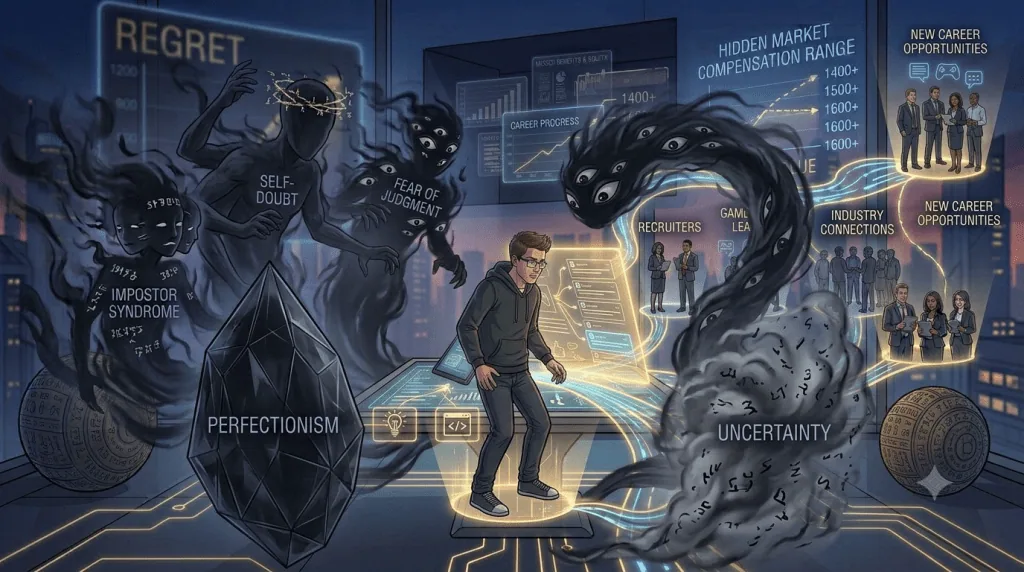
You’re sitting there with something worth sharing, something you’ve learned, something that could help people move their careers forward. And you don’t post it because you’re frozen. The voice in your head is LOUD. “I’m not an expert. People will think I’m cringe. I don’t have anything polished enough to show.”
Here’s the truth that changes everything: you don’t need to be a guru. You need to be a student who takes good notes and shows the work.
The Four Lies Keeping You Silent
Most of us believe we need permission to speak. We believe four things that aren’t true.
Lie number one: “I’m not an expert.” You’re right. But directors aren’t looking for experts on LinkedIn. They’re looking for problem solvers. A technical director sees someone documenting their learning journey and thinks “this person is serious.” They see someone shipping features and think “I can put them on my team.”
Lie number two: “People will laugh at me.” Some will. The trolls will. Guess who doesn’t hire? The trolls. The people who make decisions want to work with people who take risks and show up.

Lie number three: “It’s not ready yet.” LinkedIn isn’t a portfolio site. It’s a process journal. It’s for the messy middle. It’s for the wireframes before the final art pass. Directors respect people brave enough to show iteration.
Lie number four: “I can’t show anything because of my NDA.” You can’t post the asset. You CAN post the concept. You can break down what you learned. You can talk about the problem you solved and how. That’s your intellectual property.
Post Type 1: Under the Hood Project Breakdown
Show the messy middle. Show the gray box before the art pass. Show the iterations that failed. Show the wireframes.
This is fire because it builds credibility in seconds. A lead programmer sees your breakdown of a system you shipped and knows you can think through problems. An art director sees your iteration process and sees a collaborator.
The structure is simple: what was the goal, what did you try first, what changed, what’s the result. Keep it visual if you can. Keep it real.
Post Type 2: The War Story
When things broke and you fixed them. When the deadline shifted and you shipped anyway. When the system failed in production and you found the root cause.
The template: context (what was the challenge), disaster (what went wrong), solution (how you fixed it), lesson (what you’d do differently). A technical director will read this and think “this person solves problems under pressure.”
Don’t make yourself look perfect. Make yourself look capable.
Post Type 3: Game Mechanic Deconstruction
Pick a mechanic from a game you respect. Don’t review it. Analyze why it feels good.
Why does the grappling hook in Bionic Commando reward skill? Why does Dark Souls’ stamina system create tension? Why does the resource economy in Hades make you feel powerful?
This shows you think like a designer. You’re not just playing games. You’re studying them.
Post Type 4: Today I Learned Technical Deep Dive
Show humility. Show you’re still learning. Share something that confused you and how you figured it out.
“Today I learned how async/await actually works under the hood” or “Finally understood why our matchmaking was creating queue times.” People respect growth. They want to work with people who get it.
Post Type 5: GDC or Industry Talk Summary
Three key takeaways from a talk you watched. Tag the speaker. Tag the conference.
Speakers love this. People following you get value. You position yourself as someone who absorbs knowledge and shares it.
Post Type 6: Transferable Skill Bridge
You moved from a different industry. You have skills from film, VFX, music production, marketing.
This is GOLD for hiring managers. They’re wondering “can this person actually work in games?” You’re showing them exactly how your background makes you sharper.
“My years in music production taught me how to A-B test audio like a scientist. Now I apply that same rigor to gameplay feedback systems.”
Post Type 7: Resource Share or Workflow Hack
Share a free tool you actually use. Share a workflow that saves you time. Share a script that helped you ship faster.
Developers follow you because you make them better at their job. That’s how you build a real audience.
The Move
Pick one of these seven formats. Write one post this week. Make it real. Make it honest. Don’t try to sound smart. Just show your work.
Do this 20 times in the next six months and you’ll be shocked at the conversations that start. People will reach out. Opportunities will find you. It won’t feel like work because it’s just you thinking out loud about the craft you care about.

The goal isn’t to go viral. The goal is to make it obvious to the right people that you’re worth hiring.
For the complete LinkedIn strategy, check out our Gaming Professional Visibility Guide.
Read our complete guide: LinkedIn & Personal Brand for Game Professionals
Frequently Asked Questions
Q: How can I post on LinkedIn without sounding cringe?
A: Stop thinking you need to be a guru. Post your process, not just your polished final work. Show the messy middle, the iterations, the problem-solving behind the scenes. This proves you’re actually doing the work and hiring managers respect that way more than your perfect portfolio.
Q: What type of LinkedIn post gets you noticed by technical directors?
A: War stories absolutely crush it. Share a time something broke and how you fixed it. Structure it as context, disaster, solution, lesson. A technical director scrolling through lunch will see someone who solves problems, and that’s exactly what gets you hired.
Q: Can I post about game development work if I’m under an NDA?
A: Absolutely. You can’t post the asset, but you can post the concept. Recreate the mechanic with gray cubes, talk about your bug tracking methodology without showing the actual bug, analyze the design thinking without revealing proprietary code. Silence feels safe but it doesn’t get you hired.
Q: What makes a good LinkedIn post about learning something new?
A: Focus on niche features and specific tools you use daily. Share something like a hidden menu in Unity, a specific Unreal Blueprint node, or a workflow hack that saved you time. This proves you’re in the engine doing real work every single day, not just talking about it.
Q: Should I summarize GDC talks on LinkedIn?
A: Yes, and tag the speaker. Share three key takeaways from talks you watch. You’re giving value back to the speaker, educating your network on your own time, and showing engagement with industry trends all at once. That’s killer networking disguised as content.