The GDC Networking Playbook: Turn Conference into Real Opportunities
I watched a guy spend four grand. Flights, hotels, badge, meals. He came home with a hangover and nothing else.
The problem wasn’t GDC. The problem was he didn’t have a plan.
GDC is one of the highest-leverage events in the game industry. But leverage is only useful if you know how to use it. Most people show up, wander around, talk to the same five friends they already know, and leave wondering why they bothered.
This is the system that changes that.
GDC is one venue, but the same playbook works year-round. Here are networking tips to get hired in gaming you can use anywhere.
The Visual Anchor: Selfies That Work
Here’s the move that feels simple but actually works. When you have a great conversation with someone, take a selfie together at the end.
Two days later, send a follow-up email with that photo attached. When they see their own face in your message, something shifts. You’re not a random email. You’re the person they remember talking to. The photo creates instant context.
Do this 30 to 50 times during the conference. By the end of GDC, you’ve got a network that remembers you. More importantly, you’ve got a visual record of every connection you made.
The Soft Qualify Script
You want to know if someone is actually worth spending energy on. But you can’t just ask “are you guys hiring?” That’s awkward and it closes conversations.
Instead, use the two-phase soft qualify.
Phase one is vision. Ask: “What does massive success look like for your team by the end of the year?” This is open. It gets them talking about what matters. You’re listening. You’re learning.
Phase two is resources. Once they describe their vision, you respond with: “That’s a bold vision. What kind of resources have you set up to make sure that actually happens?”
When you say “resources,” what you really mean is budget, headcount, and priority. You’re finding out if they have the money to hire, if they have the people to support growth, and if this matters to leadership. This tells you everything you need to know about whether a conversation is real.
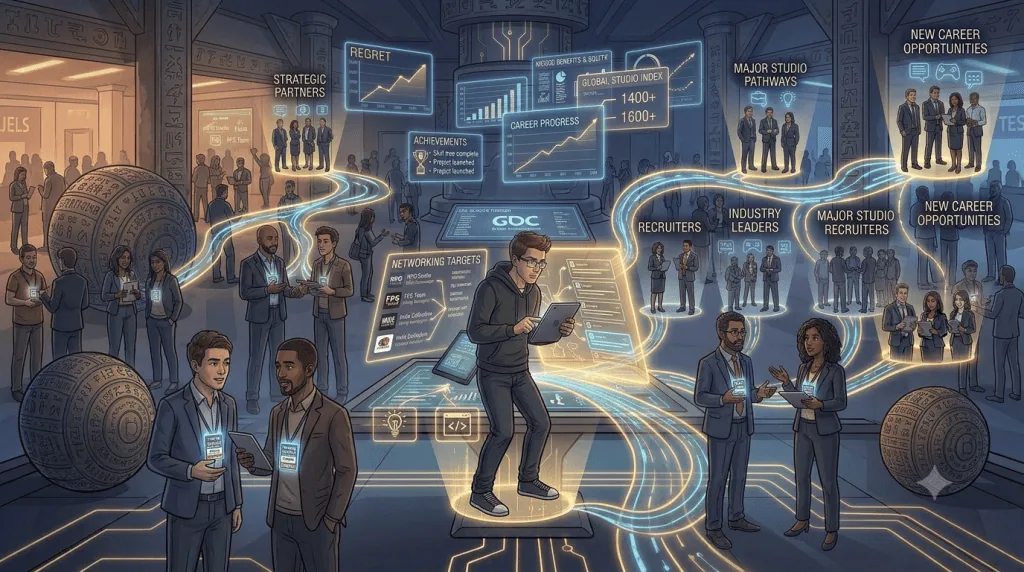
The Triage System
Not every conversation at GDC deserves equal energy. You have limited time and attention.
Use a triage system with three colors.
Reds are the must-meets. These are gatekeepers, decision makers, people at studios that matter to you. VPs of development, leads of teams you want to join. When you find a red, you anchor on that conversation.
Yellows are the long game. Peers who are going places. People you think you’ll see again in the industry in five years. You connect, you follow up, but you’re not desperate.
Greens are your tribe. Friends. People you genuinely enjoy. You hang out with them. But here’s the thing: most people spend ALL their conference time hanging with greens. That’s the trap. That’s why people waste four grand and go home with nothing.
Spend your energy on reds. That’s where opportunities come from.
The Trade-Off Mindset
Every minute you spend in a dead-end conversation is a minute you’re NOT spending with someone who can change your career.
This is brutal but true. At conferences, people tend to orbit the same five friends. That’s comfortable. That’s also a waste of your money.
You need to make a hard choice: do I want to hang out, or do I want to move my career forward? Sometimes those are the same thing. Usually they’re not.
The people who get real value from GDC are the ones willing to walk away from comfortable conversations and find new ones.
Define Your Win Condition Before You Leave
This is the kingpin. Before you even get on the plane, you need to know what winning looks like.
Not “I want to network.” That’s vague and it means nothing. Winning could be “I want three follow-up meetings with VPs at Riot, Blizzard, and EA.” Or “I want to get connected to the lead designer at Naughty Dog.” Or “I want to find one studio that’s building in Unreal and hiring.”
Your win condition needs to be specific. It needs to be measurable. And it needs to be realistic for the time you have.
Once you know what winning looks like, every conversation has a purpose. Every conversation either moves you closer to the goal or wastes your time. That clarity changes everything.
The Follow-Up System
The conference isn’t the work. The follow-up is the work.
Day two after the conference, send your email. Attach the selfie. Reference something specific you talked about. Keep it short. Keep it genuine.
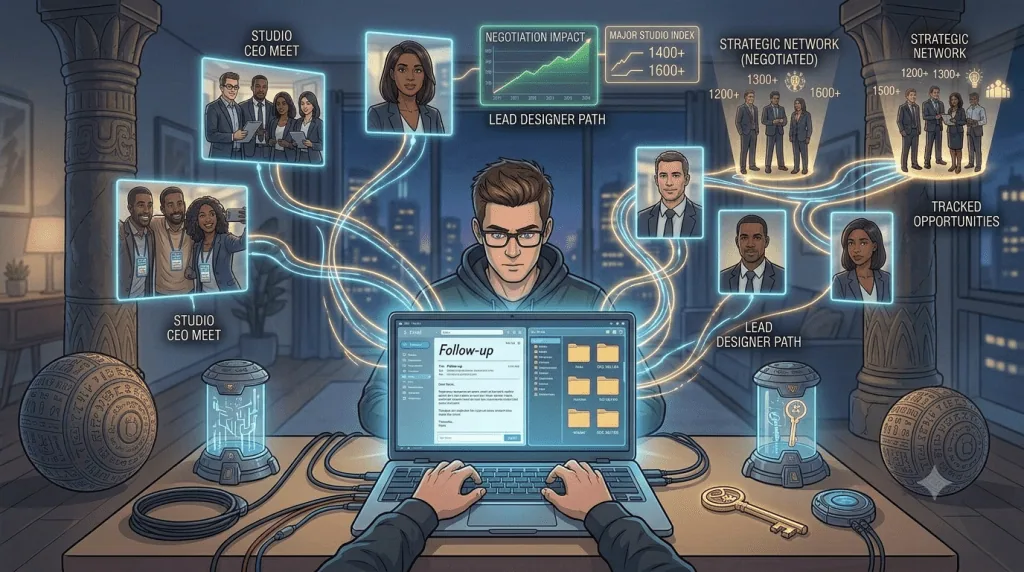
If someone said “I’m trying to figure out how to optimize our pipeline for remote teams,” your follow-up should reference that exact thing. Show that you were actually listening.
Then ask for something small. Not a job. Ask for 15 minutes to talk about the problem they mentioned. Ask if they know someone you should talk to. Ask if they’ve read a resource you want to recommend.
The goal isn’t to land a job in the follow-up. The goal is to turn a conference conversation into an actual relationship.
The System in Action
You arrive at GDC with a list of reds. You know which studios matter, which people you want to meet, which problems you want to solve.
You put on your badge. You find your first red and you lock in. You ask about their vision and their resources. You listen hard. You take a selfie. You move on.
You repeat this 30 times. You meet some yellows and some greens along the way. You make some friends. You have some great conversations.
Then you go home. You spend two days sending follow-ups with photos. You ask for small things. You start moving the needle with the reds.
Six weeks later, you’re in conversations with people who can actually help your career. And it started with a clear plan and a series of calculated moves.
If you want the complete framework, our guide to networking in the gaming industry walks through the entire strategy step by step.
That’s the difference between spending four grand and going home with nothing, and spending the same money and changing your trajectory.
For the complete networking playbook, check out our Networking in the Gaming Industry Guide.
Frequently Asked Questions
Q: How do I make my GDC follow-up emails stand out?
A: Grab a selfie at the end of the conversation while you’re both still in good energy. When you send your follow-up two days later with the photo, you’re the person in the picture with them. This memory trigger makes your email impossible to ignore, not another generic “great to meet you” that blurs into the pile.
Q: What should I actually ask hiring managers at conferences?
A: Use the soft qualify script. First ask what massive success looks like for their team by end of year. Let them talk about their wins. Then ask what resources they’ve set up to make that happen. Resources is code for budget, headcount, and priority. You just qualified a live opportunity without ever saying the word job.
Q: How do I prioritize who to talk to at a huge conference?
A: Use the triage system. Reds are must meets, your gatekeepers at dream studios or founders. Yellows are the long game, peers at companies you want in two years. Greens are your tribe, friends and former colleagues. When you filter the blur through this lens, you’re not just wandering around hoping to get lucky.
Q: What’s the biggest mistake people make at conferences?
A: Spending all weekend with the same five friends they already know. That’s the most expensive trade-off there is, comfort. You flew across the country to hang out with people you could have had a beer with at home. Every minute with a dead-end conversation is a minute you’re not spending with a high impact connection.
Q: How do I know if I’ve actually won at a conference?
A: Define your win condition before you get on the plane. Not just “I want to network” that’s a vibe, not a win condition. Something like “I want three direct follow-up meetings with VPs at Riot, Blizzard, and EA.” When you have that locked in, it tells you which parties to skip, which reds to hunt, and when it’s okay to sleep because you’re not guessing, you’re executing.