Why You're Not Getting Gaming Interviews: The Silent Resume Killers
You're not getting rejected. You're getting skipped.
Seven seconds. That's how long your resume gets looked at. Seven seconds to convince a hiring manager you're worth paying attention to.
Most people don't know they're competing against a system that filters them out before a human even reads their name. You're not losing a job comparison. You're losing visibility.
And the brutal part is that you might be PERFECT for the job. But if you can't get seen in seven seconds, none of that matters.
What You're Actually Selling
This is the insight that changes everything. You think you're selling your skills. You're selling certainty.
Every hire is a gamble. Hiring managers ask themselves: "Can I defend this hire if someone questions me?" They need to feel safe.
You're competing against people with referrals. Against people with proven track records. Against names the hiring manager already recognizes. You're competing against lowered risk.
So you need to signal clearly in seven seconds: I am an obvious choice. I am the safe bet. I am easy to defend.
Most resumes fail at this. Most people sound like a job description.
The Three Silent Killers
There are three ways a resume dies before a human reads past the first 20 words.
Silent killer number one: you sound like a job description. You're listing responsibilities instead of results.
"Responsible for developing gameplay systems and mentoring junior programmers."
That's job description language. That's what the hiring manager expected you to do. That's not interesting.
Instead: "Built real-time networking architecture serving 50k concurrent players. Mentored four junior programmers to senior level, all promoted within 18 months."
Now you're showing impact. Now you're saying "I don't just do the job, I excel at it."
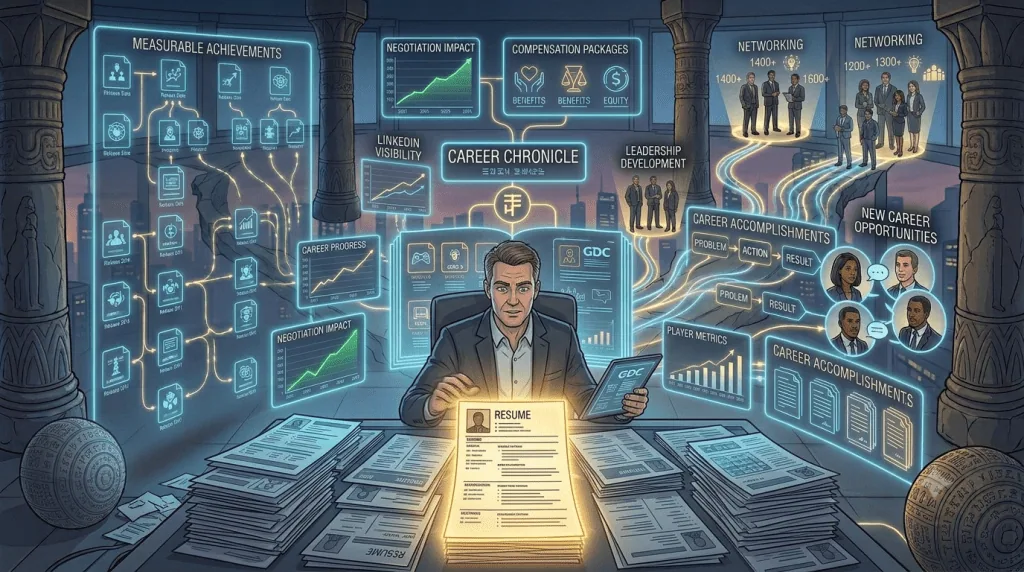
Silent killer number two: nobody knows your level in three seconds. Are you junior, mid, or senior? A hiring manager glancing at your resume should know immediately.
If your resume doesn't make your level obvious in the first few bullets, they assume you're junior and move on. Or they assume you're mid-level trying to hide something.
Use language that signals your level. Senior titles, authority markers, scope. "Led the initiative" not "participated in." "Built the system" not "helped build the system."
Silent killer number three: your story doesn't connect. No narrative. No through line.
You worked at three different studios on wildly different things. You made a career pivot. You're a different age than other candidates. Your resume should EXPLAIN why all those pieces fit together.
Instead, most people just list everything and hope the hiring manager connects the dots.
You need to weave a narrative. You need to show that every job moved you toward something. Every skill builds on the last one.
The Visibility Problem
Here's where most advice stops. Fix your resume and you'll get interviews. But that's not the whole picture.
A hiring manager gets 200 resumes for one job. She spends seven seconds on most. But she spends time with the ones that come with context.
A referral comes with context. A LinkedIn profile with a track record comes with context. A person who's been active in the community comes with context.
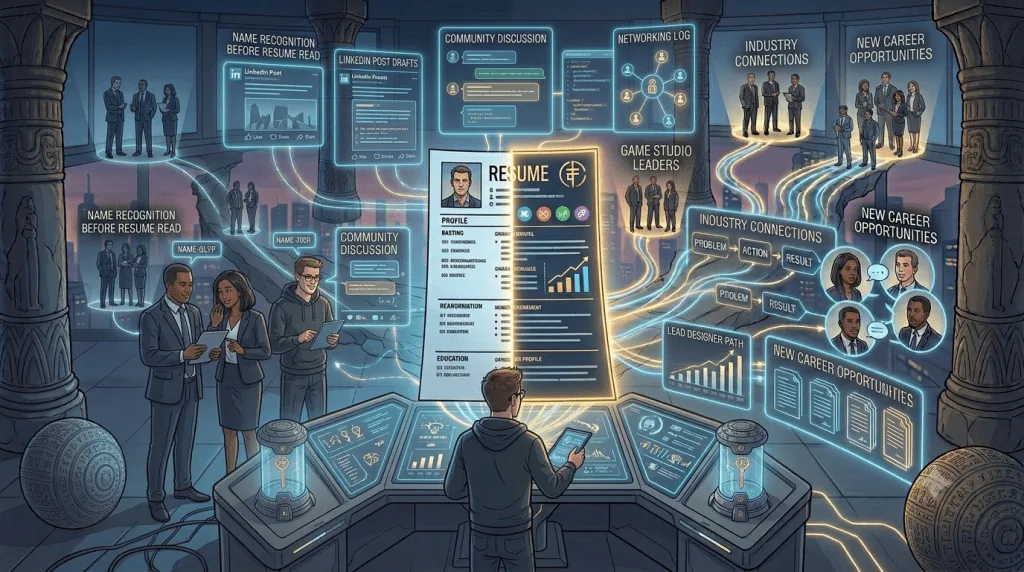
I knew a 3D artist, Sebastian, who got laid off. Moved back to Germany. Wasn't getting interviews. Then he started posting on LinkedIn. Sharing work. Talking about his process.
Within one month, getting interviews. Within two months, had an offer and relocated.
His resume didn't change. He changed his visibility.
The Four-Step Fix
Step one: clarity audit. Rewrite every bullet point from responsibility to result. What did you do and what happened because of it? Use numbers when you can.
Step two: signal your level. Make your seniority obvious in the first three bullets. Use language that matches the role you're gunning for.
Step three: build your narrative. What's the through line? Why did you make those moves? What's the skill or direction you're moving toward? Connect the dots so a hiring manager understands your arc.
Step four: get visible. This is the game changer. Post on LinkedIn. Share your work. Go to industry events. Join Discord communities. Contribute to open source. Make yourself impossible to miss.
When a hiring manager sees your resume AND recognizes your name from LinkedIn, suddenly you're not a rando. You're the person who's been showing up. You're the person they've seen thinking about the craft. You're interesting.
The System
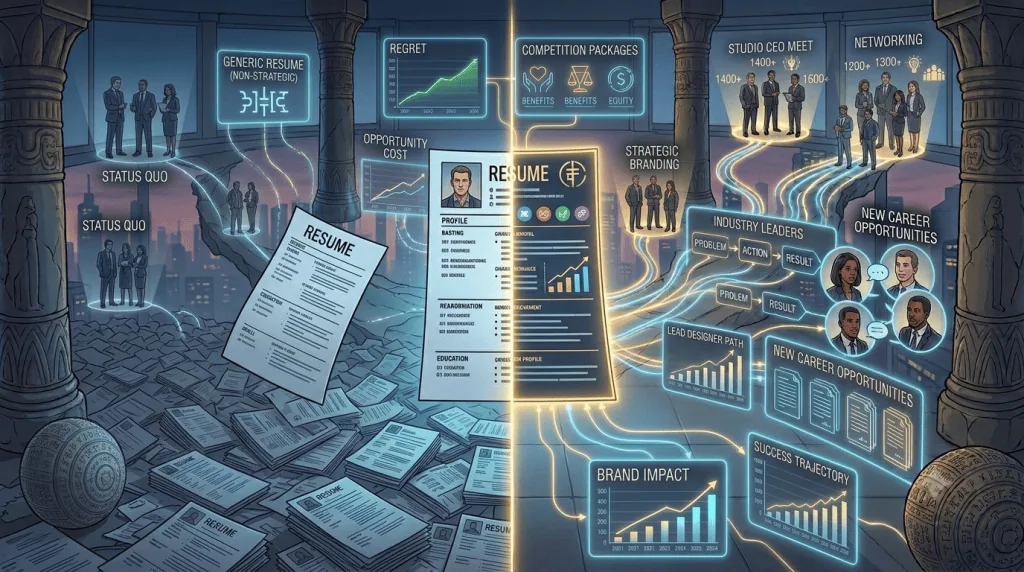
Your resume is the filtering mechanism. Make sure you pass the seven-second test.
Your visibility is the multiplier. Make sure you're somewhere the hiring manager can already see you.
Together, these aren't tips. This is a system. You get your resume right. You build visibility. You're no longer competing on luck or timing. You're competing on clarity and presence.
And that's when the interviews start coming.
Read our complete guide: Visibility and Professional Presence in Gaming
Frequently Asked Questions
Q: How much time do hiring managers actually spend looking at my resume?
A: Seven seconds. That's how long your resume gets looked at before someone decides pile A gets a call and pile B gets silence. If your resume requires effort to understand, you're done before you even started. Every studio is drowning in resumes, so you need to be obvious, not talented.
Q: Why am I getting skipped instead of rejected?
A: Hiring managers aren't asking if you're talented, they're asking if they can defend this hire if someone questions them. They're looking for the safest bet and the least amount of risk. You're competing on clarity, not skill. If your resume story is unclear or your fit is obvious, you get skipped before you even get a rejection.
Q: What's the biggest resume killer that nobody talks about?
A: Sounding like a job description. Collaborated with teams, supported pipelines, worked on projects, that tells me nothing. What did you actually do? What changed because you were there? If your bullet points could apply to literally anyone in your role, they're worthless. You need results, not responsibilities.
Q: How do I show my level on a resume immediately?
A: I should be able to tell if you're junior, mid, senior, or lead within three seconds of looking at it. If I have to figure it out, you've created friction and friction gets skipped. Put your title front and center, use language that matches your level, and share achievements that prove you're performing at that level, not just existing in the role.
Q: Why are people with network referrals getting jobs and I'm not?
A: You're applying online to a pile at a AAA studio that's got laid-off devs from Blizzard and Epic with 15 years of experience. You're playing the hardest game on hardest difficulty. You need visibility before the job even posts. Get on LinkedIn, share your work, post what you're learning, build your network fast like it's a main quest, not a side quest.