The Hidden Truth About Hiring Managers at AAA Studios
You think the hiring manager holds all the power in the interview process. Let me flip that for you.
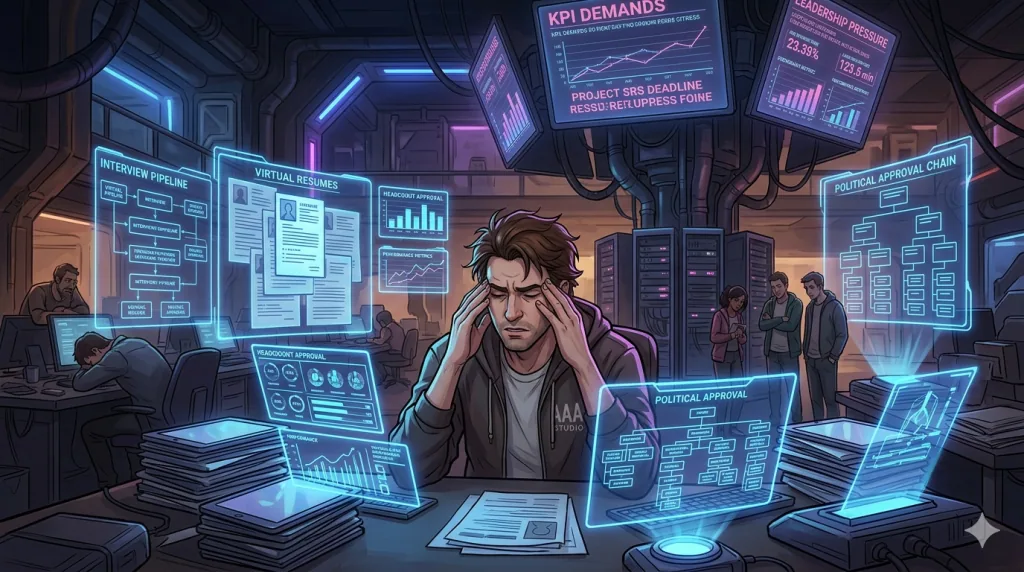
Hiring managers at AAA studios are more stressed than the candidates they’re interviewing. They’re drowning in politics, pressure, and red tape. Every conversation is a negotiation. Every decision is contested. And most of the time, they’re fighting for resources that don’t exist.
The pressure comes from above. Every year, the mandate stays the same: Grow. More revenue. Bigger audience. More games. But none of this happens without resources. You need budget. You need people.
So the hiring manager applies for headcount. They make their case to leadership. And then it gets lumped together with every other department’s request. Marketing wants three people. Engineering wants five. Product wants two. Your headcount request isn’t evaluated on merit. It’s evaluated on political priority.
The company’s goal is to grow without hiring. So they pressure everyone with crazy KPIs, then make you fight for resources. It’s a game rigged before you even sit down to play.
The Fear That Shaped Your Job Description
Let’s say you actually win approval to hire. Now you write the job description. And here’s where the politics get interesting.
You stick to the company template. You pad it with requirements you don’t even need because you’re terrified. You get ONE shot at this hire. If you get it wrong, headcount gets frozen. The pressure is CRUSHING.
That job description asking for five years of experience for a junior role. That’s not malice. That’s fear. Nobody actually wants to interview. It’s unpaid work. It’s unrewarded. It’s untracked. Nobody gets credit for finding great talent. But you get BLAMED if you hire the wrong person.
So you don’t pick the best reviewers for your interview panel. You pick people who owe you a favor. You pick people who are available. Your interview panel becomes a political construct instead of an optimization for finding the best talent.
The Grinding Reality of the Hiring Pipeline
Your job description goes live. And then you wait. The best candidates aren’t looking. They’re busy kicking ass somewhere else. They’re already employed and crushing it.
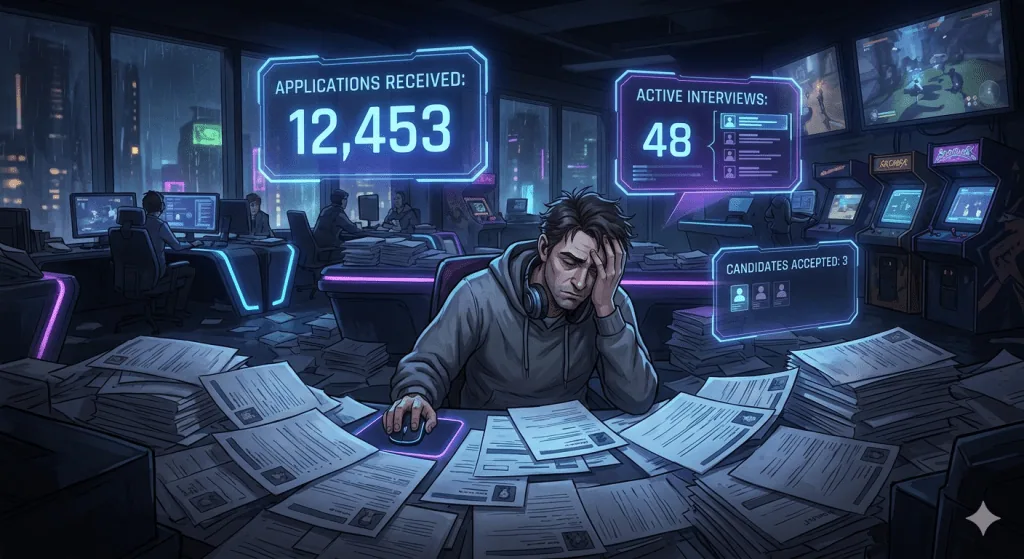
You start screening resumes. You screen 1,200 of them. You conduct 42 phone screens. You find two candidates worth bringing in. That’s the ratio. Two out of 1,200. And this is why candidates get ghosted at every stage. The volume is crushing.
After what feels like forever, you’ve got five candidates who might actually work. You run them through your interview panel. Two pass. Sort of. They’re not amazing, but they’re not terrible.
Now you go back to the no voters. You try to negotiate. “How hard is your no?” Could they potentially say yes with a different angle? Your six-person panel becomes seven. Then eight. Each new person wants to interview because they want to be part of the decision. Politics.
You’re six months in. Your team is burning out from covering the open role. You’re still not hitting KPIs. The pressure from above is getting worse. And you’ve got four more roles to fill.
One candidate somehow passes the gauntlet. But first, there’s a final boss: the sponsor interview. You prepare a formal case. You document why this person is worth hiring. And then you wait because sponsors are busy. They’re crushing it somewhere else too.
If they say yes, you make an offer. But by this point, you have ZERO leverage. Eight months invested. Your team overworked. Your reputation on the line. When that candidate asks for more salary, you say yes to everything. You’d hire them for anything at this point.
You finally make the hire. Relief floods through you for about five seconds. Then you remember you’ve got four more roles to fill.
That’s the brutal truth about being a hiring manager at a AAA game studio.
What This Means for Your Interview Strategy
Understanding this changes how you show up in interviews.
The hiring manager isn’t trying to break you. They’re trying to survive. They’re not evaluating you in a vacuum. They’re evaluating you while drowning in politics and pressure.
They want to hire someone who makes their life easier, not harder. Someone who can ship. Someone who communicates clearly. Someone who doesn’t create drama.
They’re also incredibly risk-averse by month six of the process. They’ve already spent six months on this. They don’t want surprises. They want confidence. They want someone who knows what they’re doing.
This is why soft skills matter so much in AAA hiring. Technical skills are table stakes. But the ability to navigate studio politics, ship under pressure, and communicate through chaos? That’s what breaks the tie.
Show up knowing the studio’s challenges. Show up ready to solve problems immediately. Show up as someone who makes the hiring manager’s life easier, not harder.
Your Move
The hiring manager isn’t your enemy. They’re a stressed professional trying to build a team while the system works against them. When you understand their pressure, you can position yourself as the solution they desperately need.
Stop trying to impress them. Start trying to help them win.
Read our complete guide: Gaming Interview Prep
Frequently Asked Questions
Q: Why do hiring managers write job descriptions padded with unrealistic requirements?
A: It’s not malice, it’s fear. You get one shot at this hire and if they don’t work out, you might not get another headcount next year. So you pad the JD with requirements you don’t actually need because you’re terrified of making a bad choice. Fear drives the bad jobs descriptions you see everywhere.
Q: Why is building an interview panel actually a political nightmare?
A: Nobody wants to interview because it’s unpaid work on top of an already packed schedule. So you don’t pick the best reviewers, you pick people who owe you a favor or have political clout to make the process look credible. Your panel becomes a political construct, not one based on merit.
Q: What happens when a hiring manager screens 1200 resumes and only finds two candidates?
A: That’s the system working as intended, except it’s not. The best candidates aren’t looking because they’re busy doing great work somewhere else. So hiring managers get ghosted, extend deadlines, and make desperate compromises just hoping a miracle candidate shows up. Then they blame the candidate pool.
Q: Why does a hiring manager lose all negotiation leverage by the time they make an offer?
A: Eight months of investment, a burned out team, budget in the danger zone, and still needing to hit KPIs. When that candidate asks for more salary or a better title, you say yes to everything because you’re desperate and you finally made the hire. The candidate doesn’t realize how much power they have at that moment.
Q: What’s the final boss that even successful candidates have to face?
A: The sponsor interview. They’re the ultimate gatekeeper and now the hiring manager has to build a formal case for why this person should be hired, what their weaknesses are, and how you’ll mitigate them. Meanwhile the candidate could accept another offer while you’re waiting for the sponsor to find time in their calendar.