Five LinkedIn Strategies Gaming Recruiters Actually Use to Find You
Your LinkedIn profile is the first place gaming recruiters look when they’re trying to find someone. And most job seekers are wasting their best real estate on generic posts or old projects nobody cares about. I’m going to break down the five strategies that actually work because these are the same tactics I use with my clients.
The difference between a profile that gets recruiter messages and a profile that gets crickets isn’t always experience. It’s visibility and strategy.
Featured Section: Your Most Valuable Real Estate
The featured section has gotten me more recruiter outreach and interview requests than my entire work history section. And yet most job seekers completely overlook it.
Here’s what gaming job seekers typically do wrong: They pin their university capstone project from two years ago or one viral post and think they’re done. They’re wasting the most valuable real estate on their entire profile.
Use all three featured slots strategically.
Slot One: Your Best Portfolio Piece. A shipped game. A mod. A design document. A relevant project that shows you can actually build things. This needs to be something you’re proud of, not something you checked off a list.
Slot Two: A Case Study or Breakdown. Show your problem-solving process. This is where you prove you don’t just execute, you think. A “How I Optimized Matchmaking Queue Times by 40%” breakdown gets attention. A “Level Design Breakdown: 12 Encounters That Teach Mechanics” gets attention. You’re showing the craft, not just the output.
Slot Three: Your Resume as a PDF. Make the thumbnail professional and compelling. Add a title like “Game Designer: 15 Boss Fights, 50K+ Players, Unreal Engine.” When a Riot or Blizzard recruiter clicks your profile, they immediately see you’re not just interested in games. You build things. You ship results. Everything about your profile says the same thing.
A good thumbnail takes two hours. It’s worth every minute.
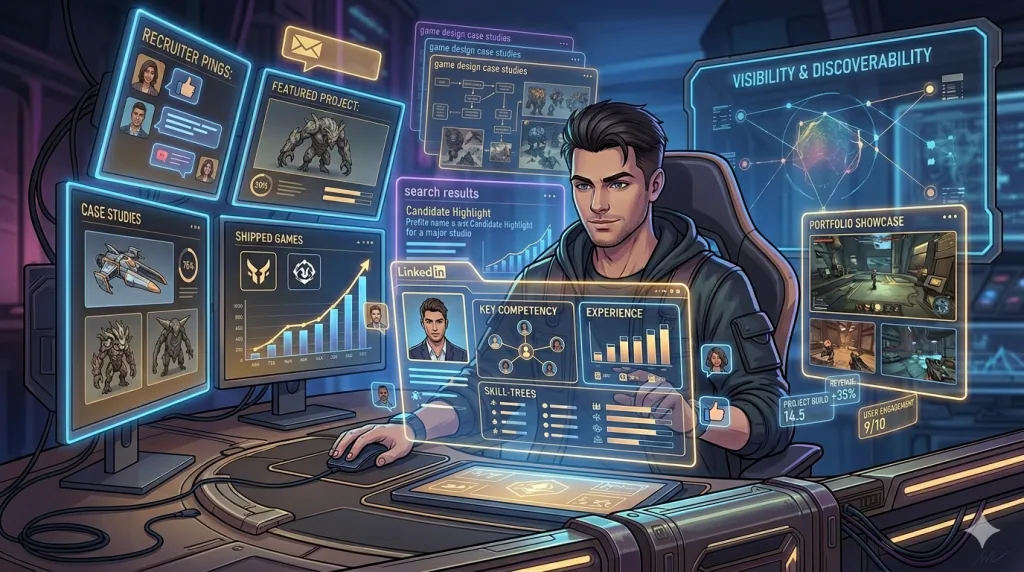
Your Headline: Make Yourself Searchable
On LinkedIn, if you’re not findable, you don’t exist. And your headline is where findability happens.
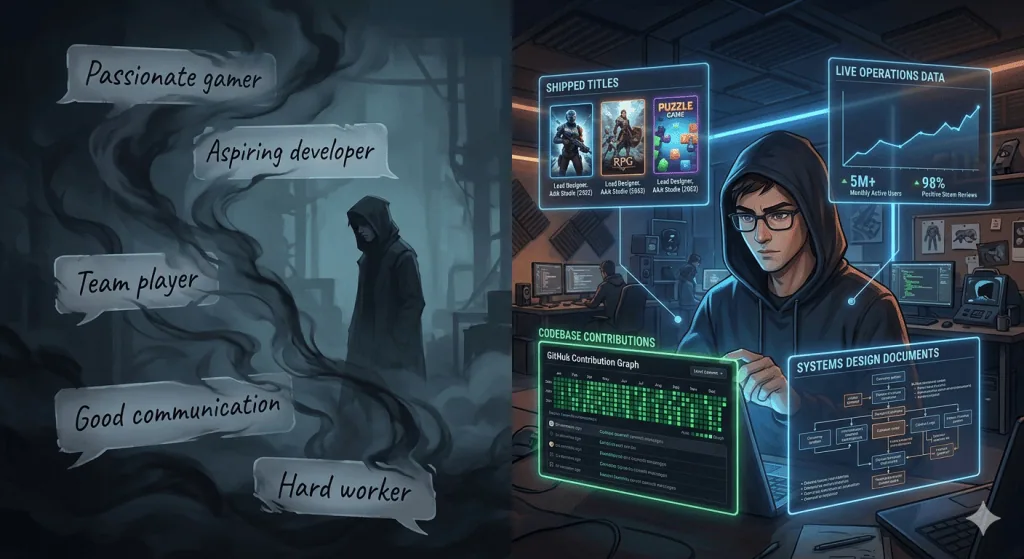
Everyone’s headline says something like “Aspiring Game Designer” or “Passionate About Games” or “Recent Grad Looking for Opportunities.” That tells recruiters absolutely nothing about what you actually do.
Gaming recruiters search LinkedIn for game titles, company names, and specific skills. If “Unreal Engine,” “League of Legends,” or “Roguelike” isn’t in your headline, you won’t show up in their searches.
Your headline needs three elements: your skill, your impact with numbers, and game names or companies you’ve worked with. Tools count too if there’s room.
Bad headline: “Game Design Graduate Passionate About Player Experience.”
Better headline: “Combat Designer, Created Boss Fights for Indie Game, Unreal Engine and Unity.”
Even better headline: “Combat Designer, Designed 15 Boss Encounters for Darkest Dungeon Inspired Roguelike with 50,000+ Players, Unreal Engine.”
That third one name-drops a recognizable game, includes hard numbers, and shows technical capability. A recruiter searching for “Roguelike designer Unreal” just found you. A recruiter searching for “boss encounter design” just found you. You’re now in the conversation.
Quantified Results: Numbers Beat Vague Claims Every Time
Hard numbers create strength and credibility. Gaming recruiters don’t care about vague claims. They want quantified results everywhere: headline, banner, featured section, posts.
“Worked on a game” means nothing. “Built 12 levels that 50,000 players completed” means everything. Numbers prove you ship. Numbers show scale. Numbers make you memorable.
Even if you’re early career, you have numbers. Game jam rankings. Download counts. Player feedback scores. GitHub stars. Tutorial view counts. Discord member growth. Itch.io plays. GitHub contributions. Any metric that shows impact.
If you literally have zero numbers to show right now, then this month is your deadline to create them. Build something. Ship something. Get it in front of people. Get data. Numbers separate you from everyone else claiming to be interested in games.
Your Banner: Tell Your Story Visually
Most people use a generic gaming screenshot or artwork. That’s a missed opportunity.
Feature logos or visuals that establish credibility. Game jams you’ve participated in. Game engines you’re good at. Studios you’ve interned at. Your banner should tell recruiters: This person makes games in this engine with these skills.
Look at LinkedIn photos of people already working at the studios you’re targeting. See what they feature. Your banner should communicate the same level of professionalism and specificity.
You’re not trying to look cool. You’re trying to look like someone who’s already doing the work.
Profile Photo: Credibility in One Image
Your profile photo is a credibility signal. The gaming industry has become more professional in recent years. This doesn’t mean suit and tie because that might actually hurt you. It screams “I don’t understand gaming culture.”
But it also doesn’t mean a selfie in your hoodie at your desk.
Professional but authentic gaming industry attire. Good natural light. Plain background. You need to look like someone who belongs at a studio. Look at LinkedIn photos of people already working at the studios you’re targeting. Mirror that energy.
This takes two hours of work. Maybe you borrow a friend’s camera. Maybe you get good natural light from your window and take a phone photo. That’s it. Two hours tops and you’ve upgraded a major credibility signal on your profile.
One Last Thing: The Difference This Makes
I coached a designer once who was applying everywhere with no callbacks. Profile was a mess. Featured section was random. Headline was generic. Numbers were buried or missing. We rebuilt everything. Three weeks later, recruiters started reaching out to HIM. He didn’t change his skills. He didn’t change his experience. He just became findable.
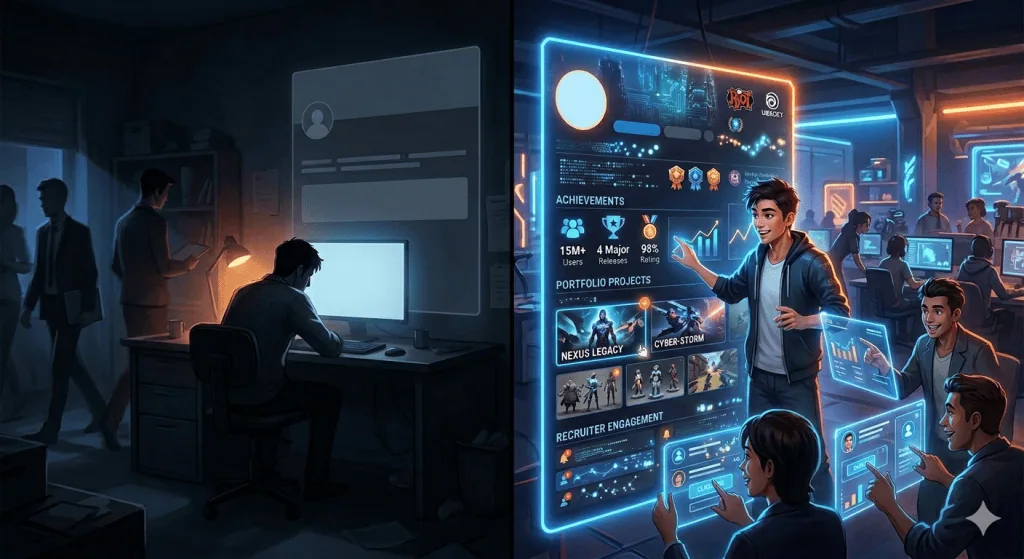
That’s what these five strategies do. They make sure your actual skills and impact are visible to the people looking for exactly what you can do.
For the complete LinkedIn strategy, check out our Gaming Professional Visibility Guide.
Read our complete guide: LinkedIn Strategy for Gaming Professionals
Frequently Asked Questions
Q: How do you set up the LinkedIn Featured section for gaming jobs?
A: You get three slots, so use them strategically. Drop your best portfolio piece, your strongest case study, and your resume as a PDF. This is where hiring managers spend five seconds deciding if you’re worth clicking deeper, so make those slots count.
Q: What makes a gaming LinkedIn headline that actually converts?
A: Mix your core skill with numbers and a game name drop when it lands right. Instead of “Game Designer,” try “Game Designer | Shipping Combat Systems That Boosted Player Retention 18%.” You’re giving hiring managers the evidence before they even click your profile.
Q: Where should you put your quantified results on LinkedIn?
A: Quantify everything. Don’t say “improved systems,” say “implemented progression system played by 240K players.” Put numbers in your headline, in your featured content, in your experience section. Numbers are like loot drops, they prove the value actually exists.
Q: What should your LinkedIn banner show to build credibility?
A: Display the games you shipped on, the engines you master, the studios you’ve worked with, or the game jams you’ve dominated. Your banner should say “this person builds things that matter” in about two seconds. Gaming credibility is visual, so show your track record.
Q: How should you approach your LinkedIn profile photo?
A: Professional but gaming-appropriate. You’re not interviewing at a bank, but you’re not showing up to a LAN party either. Clear lighting, friendly energy, dressed in a way that shows you take this seriously but you’re still a human being who builds games.